As someone who has spent years caring for a diverse family of animals—from standard-issue domestic cats to finicky green iguanas—I know that heart-stopping moment when your pet just isn’t right. Maybe your loyal senior dog has started dragging a paw, or your favorite rabbit is suddenly acting lethargic and refusing her favorite greens. In the world of exotic and domestic pet care, we often find ourselves acting as detectives. Because our companions cannot tell us where it hurts, we rely on our veterinarians to piece together the puzzle. Traditionally, this started and ended with a physical exam and a basic X-ray. But as veterinary medicine has evolved, so has our ability to look deeper, literally. Modern technology like MRI and CT scans has revolutionized how we care for our animals, moving us from guesswork to precision. However, as I’ve learned through years of vet visits and late-night research, not all scans are created equal. The quality of the imaging equipment can be the thin line between a successful diagnosis and a frustratingly vague result.
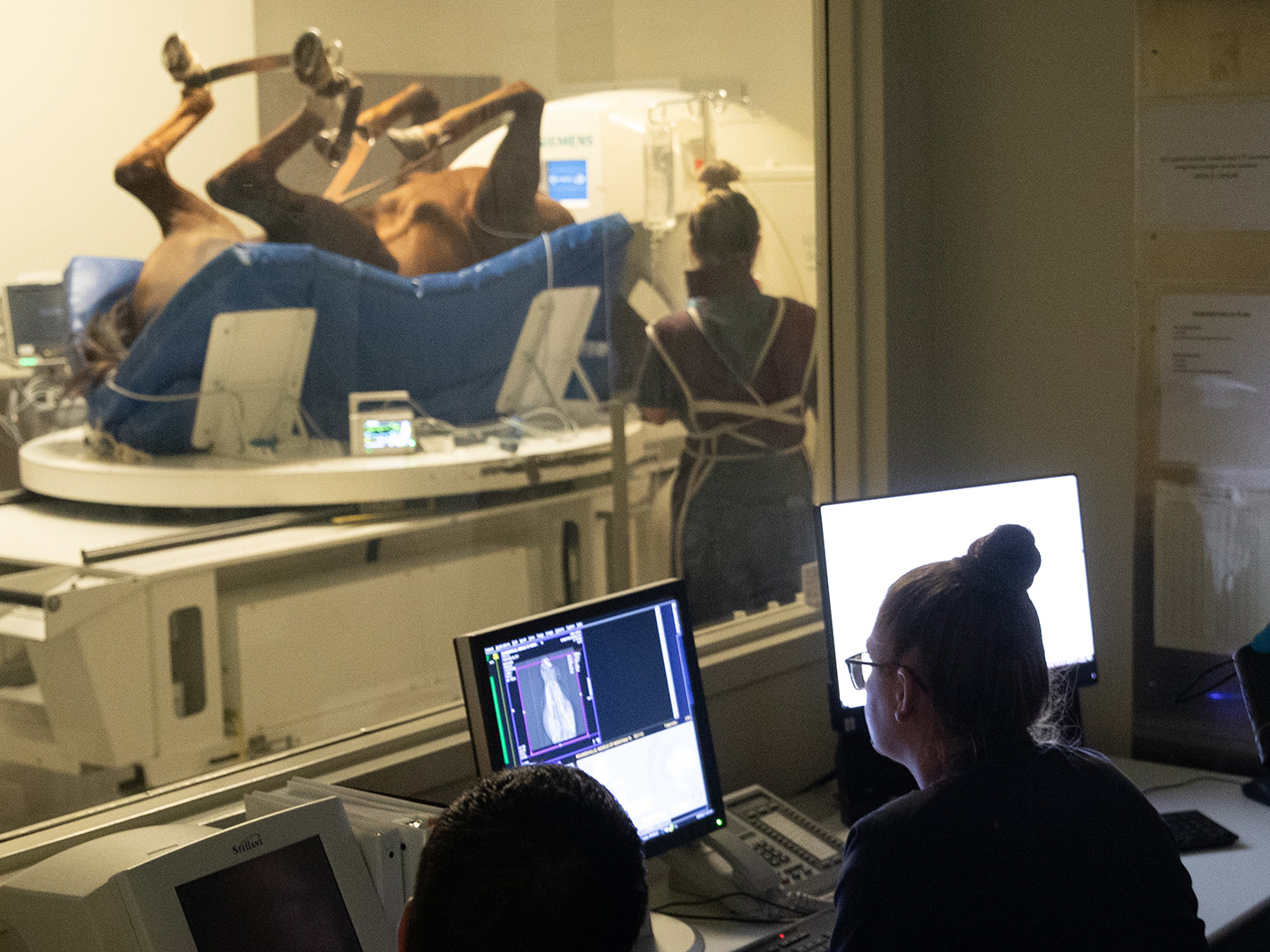
Beyond the Surface: The Evolution of Veterinary Diagnostics
For decades, the humble X-ray (radiography) was the gold standard. It was quick, relatively cheap, and great for spotting broken bones or swallowed car keys. Then came ultrasound, allowing us to see moving organs and fluid. But even with these tools, certain parts of the body remained shrouded in mystery. The brain, the spinal cord, and the intricate soft tissues of the joints are notoriously difficult to visualize with 2D imaging. This is where cross-sectional imaging, specifically CT and MRI, changes the game. As Dr. Sydney Gibson from the Texas A&M College of Veterinary Medicine & Biomedical Sciences points out, these tools allow us to see the body in ‘slices.’ Imagine a loaf of bread; if you look at the whole loaf, you can’t see a hole in the middle of a single slice. Cross-sectional imaging lets us examine every single slice individually, ensuring nothing is hidden. This level of detail is crucial because complications that can arise from delayed pet visits often stem from internal issues that aren’t visible to the naked eye.
Magnetic Resonance Imaging (MRI): The Soft Tissue Specialist
MRI is truly a marvel of modern physics. Unlike X-rays, it doesn’t use radiation. Instead, it uses incredibly powerful magnets and radio waves to talk to the protons in your pet’s body. When the radio waves are turned on and off, these protons emit signals that a computer translates into a high-resolution image. In the exotic pet world, MRI is a literal lifesaver for neurological cases. If a parrot is having seizures or a ferret is showing hind-limb weakness, an MRI is often the only way to see if there is a tumor, an inflammatory disease, or a disc herniation. MRI is the undisputed king of soft tissue. It provides unparalleled contrast, allowing vets to distinguish between different types of tissue that might look identical on a CT scan or X-ray. If your vet is looking for a brain lesion, a spinal cord injury, or a complex ligament tear in a dog’s knee, MRI is the standard. However, pet owners should be aware that MRIs take time—usually 45 minutes to over an hour—and require the pet to be completely still. This means general anesthesia is a non-negotiable part of the process.
Computed Tomography (CT): Speed and Bone Detail
While MRI excels at soft tissue, Computed Tomography, or CT, is the master of architecture. It uses X-rays taken from a rotating gantry to create a 3D reconstruction of the body. One of the biggest advantages of CT is speed. A CT scan can often be completed in minutes. For a pet that has been in a traumatic accident or a bird with respiratory distress, this speed is vital. CT is particularly adept at looking at the lungs, the complex structures of the skull (like the nasal passages and ears), and the intricate details of bones. In many cases, CT only requires heavy sedation rather than full anesthesia, which can be a safer alternative for older pets or those with certain health risks. When you notice critical warning signs your pet needs an urgent vet visit, a CT scan is often the fastest way to rule out internal bleeding, organ masses, or complex fractures that a standard X-ray might miss.
The Quality Factor: Why Your Vet’s Equipment Matters
As a consumer, it is easy to assume that an MRI is just an MRI. However, as Dr. Gibson emphasizes, there is a massive difference between ‘low-field’ and ‘high-field’ systems. A low-field MRI uses a weaker magnet, which results in lower resolution and longer scan times. Think of it like trying to watch a movie on an old tube television versus a 4K Ultra-HD screen. With a low-field unit, the ‘noise’ in the image can mask small tumors or subtle inflammatory changes. High-field MRI systems, usually found at university teaching hospitals or large specialty centers, provide the crisp, detailed images needed for a definitive diagnosis. The same principle applies to CT. Conventional ‘fan-beam’ CT is the gold standard for most applications because it produces fewer artifacts (image imperfections). While ‘cone-beam’ CT is a fantastic tool for specific areas like dentistry or imaging very small ‘pocket pets’ like hamsters and sugar gliders, it often lacks the contrast needed for detailed abdominal or chest work in larger animals.
The Cost of Low-Quality Imaging
It can be tempting to choose a clinic based on a lower price for a scan. We all want to save money, especially when vet bills start climbing. But there is a hidden cost to low-quality imaging. If a low-field MRI produces a ‘fuzzy’ image that is inconclusive, your vet might not be able to recommend a specific surgery or treatment. You may end up needing to repeat the scan at a specialty center with better equipment, effectively paying for the procedure twice. High-quality imaging provides answers the first time, leading to faster treatment and, ultimately, better outcomes for our furry (or scaly) friends.
Imaging for the Unusual: Special Considerations for Exotic Pets
For those of us who keep exotics, the stakes are often higher. Small mammals, reptiles, and birds have incredibly fast metabolisms and can hide illness until it is very advanced. Furthermore, their anatomy is tiny. Trying to find a stone in the bladder of a guinea pig or a mass in the coelom of a bearded dragon requires extreme precision. This is where the specific type of CT equipment matters. Cone-beam CT has become a favorite in the exotic community because it can capture high-resolution images of tiny bones and teeth in small animals very quickly. If you have a rabbit with dental disease (a very common and painful condition), a cone-beam CT can show the roots of the teeth in 3D, allowing for much more accurate dental filing or extractions than a traditional X-ray could ever provide.
Preparing Your Pet for the Big Day
If your vet has recommended advanced imaging, it’s natural to feel a bit anxious. The best thing you can do is be prepared. Most facilities will ask you to fast your pet for several hours beforehand to ensure a safe anesthesia or sedation process. You should also discuss your pet’s temperament. If you have a particularly nervous cat or a high-strung dog, working with your vet on stress-free vet visits protocols can make the drop-off much easier. Always inform the radiology team if your pet has any metal implants, such as plates from a previous surgery or even a microchip, as these can affect the magnet in an MRI or create streaks in a CT scan. While modern microchips are generally MRI-compatible, they can cause a small ‘blind spot’ in the image immediately around the chip.
People Also Ask: Common Questions About Pet Imaging
Is MRI or CT safer for my pet?
Both are very safe, but they carry different risks. MRI uses no radiation but requires longer anesthesia. CT uses X-ray radiation but is much faster and may only require sedation. Your vet will choose the one that poses the least risk based on your pet’s specific health status.
How much does a pet MRI cost?
Generally, an MRI can cost anywhere from $1,500 to $3,500 depending on the area being scanned, the location of the clinic, and whether a specialist (radiologist) is interpreting the results. CT scans are usually slightly less expensive, often ranging from $800 to $2,000.
Why does my pet need anesthesia just for a ‘picture’?
Unlike humans, we can’t tell a dog or a lizard to ‘hold their breath and don’t move’ for 30 minutes. Even the slightest movement, like breathing or a twitching whisker, can blur the image and make it useless. Anesthesia ensures the pet is safe, still, and pain-free during the process.
Can I stay with my pet during the scan?
Typically, no. Because of the radiation used in CT and the strong magnetic fields in MRI, owners must stay in the waiting area. However, the veterinary team will monitor your pet’s vitals (heart rate, oxygen, etc.) every second they are in the machine.
The Expert Verdict: A Gift of Modern Medicine
Dr. Gibson aptly describes these tools as a ‘gift.’ In my experience, they are more than that; they are a bridge to more time with our beloved companions. We are living in a golden age of veterinary care where the same technology used to treat humans is now available for our pets. Whether it is a high-field MRI for a complex spinal issue or a specialized CT for a pocket pet’s dental health, the quality of the image is the quality of the care. By asking your vet about the strength of their MRI or the type of CT they use, you aren’t being a ‘difficult’ client; you are being an informed advocate for your pet. High-quality imaging doesn’t just provide a clearer view—it provides a clearer path to healing.
Actionable Conclusion for Pet Owners
When your pet is facing a health mystery, don’t be afraid to dig into the details. If a scan is recommended, ask the following: Is the MRI high-field or low-field? Is the CT a fan-beam or cone-beam system? Will a board-certified veterinary radiologist be reading the results? While these questions might seem technical, the answers will tell you if you are getting the most accurate information possible. Remember, early and accurate diagnosis is almost always more cost-effective and successful than treating a ‘guessed’ condition. Trust your gut, trust the technology, and always advocate for the best possible views of your pet’s internal health. After all, they deserve nothing less than the clearest path to recovery.


