The Abyssinian is often described by enthusiasts as the ‘clown of the cat world’ or a ‘miniature cougar’ due to its sleek, muscular build and vibrant, ticked coat. Renowned for their intelligence and boundless energy, these felines are far from being your average lap cat. Originally brought into the limelight in the late 19th century, the Abyssinian has consistently remained one of the most popular breeds globally. Whether they are performing acrobatic feats from the top of your refrigerator or investigating the inner workings of a kitchen faucet, the Abyssinian commands attention and devotion from their human companions. This guide, featuring insights from Dr. Fiona Lee, DVM, explores the intricacies of this ancient breed to help you determine if their spirited nature aligns with your lifestyle.
The Mysterious Origins of the Abyssinian
While the name suggests a heritage rooted in Ethiopia (formerly Abyssinia), modern genetic research tells a slightly different story. For decades, it was believed that British soldiers returning from the Abyssinian War in the 1860s brought the first specimens back to Europe. However, recent DNA studies conducted in the early 2020s suggest the breed’s ancestors likely originated along the coast of the Indian Ocean and parts of Southeast Asia. Traders likely brought these cats to the port of Alexandria, Egypt, from where they were eventually exported to England.
The first recorded Abyssinian in the West, a cat named ‘Zula,’ was exhibited in the Crystal Palace show in 1871. Since then, the breed has undergone refined development, emphasizing its lithe, medium-sized body and high-set, wedge-shaped face. Despite their diverse genetic history, they remain one of the purest expressions of the athletic feline form, possessing a grace that is almost unparalleled in the domestic cat world.
Physical Characteristics: The Agouti Glow
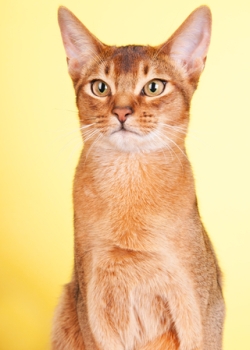
The hallmark of the Abyssinian is its ‘ticked’ or agouti pattern. Each individual hair is banded with multiple colors, giving the coat a shimmering, iridescent quality that resembles that of a wild rabbit or a cougar. This coat is short, fine, and exceptionally shiny, requiring very little manual grooming to maintain its luster.
Standard colors include:
- Ruddy: The most famous color, a burnt-sienna brown with black ticking.
- Sorrel: A warm, reddish-cinnamon color with chocolate-brown ticking.
- Blue: A soft warm gray with darker steel-blue ticking.
- Fawn: A pale beige with cocoa-brown ticking.
- Silver & Lilac: Rarer variants that provide a striking, metallic appearance.
Physically, these cats weigh between 9 and 12 pounds. They feature slender legs, small oval paws, and a long, arched neck that supports a head with wide-set, alert ears. Their eyes are almond-shaped and come in brilliant shades of gold, green, or hazel, often rimmed with a dark ‘eyeliner’ that accentuates their expressive gaze. While much smaller and sleeker than the Maine Coon cat, the Abyssinian shares a similarly high level of intelligence and curiosity.
Personality and Behavioral Traits: Living with an Athlete
If you are looking for a cat that will sit quietly on the sofa all day, the Abyssinian is probably not the right choice. These are highly active, athletic felines that view your home as a vertical playground. They are famously ‘height-seeking,’ often found atop door frames or the highest shelves in the house. Their curiosity is legendary; an Abyssinian must know what is in every cupboard and what happens when they nudge a pen off a desk.
They are deeply affectionate but on their own terms. Rather than being a ‘lap cat,’ they are more of a ‘shoulder cat,’ preferring to be involved in whatever you are doing. They will follow you from room to room, supervising your chores and ‘helping’ you type on your laptop. Many owners report that their Abyssinians enjoy playing in water, frequently batting at drips from the sink or even joining their owners in the shower. Because of their social nature, keeping your home organized and hygienic, such as learning how to choose the right litter for your cat, is essential to accommodate their fastidious and active habits.
Health and Wellness: Common Conditions in Abyssinians
While generally hardy, the Abyssinian is predisposed to certain hereditary health issues. As noted by Dr. Fiona Lee, DVM, and insurance claim data from Pets Best, owners should be aware of the following conditions:
- Progressive Retinal Atrophy (PRA): A genetic condition that leads to the gradual degeneration of the retina, potentially causing blindness.
- Pyruvate Kinase Deficiency (PKD): An inherited hemolytic anemia caused by a deficiency in an enzyme necessary for red blood cell metabolism.
- Renal Amyloidosis: A serious condition where a protein called amyloid is deposited in the kidneys, which can lead to kidney failure.
- Gingivitis and Periodontal Disease: This breed is particularly prone to dental issues, making regular cleanings and veterinary check-ups vital.
- Patellar Luxation: A hereditary dislocation of the kneecap that can range from mild to severe, sometimes requiring surgical intervention.
Given their high energy levels, obesity is rare, but for less active individuals, knowing how to help an overweight cat lose weight is a vital skill for any owner. Regular veterinary visits and comprehensive pet insurance are highly recommended to manage these potential costs throughout the cat’s life, which typically spans 12 to 15 years.
Expert Verdict: Is an Abyssinian Right for You?
The Abyssinian is a brilliant, demanding, and endlessly entertaining companion. They thrive in environments where they receive plenty of mental stimulation and physical exercise. They are excellent for families with children or other pets, as they are social and rarely aggressive. However, their high-strung nature in some bloodlines means they may not do well in extremely chaotic or noisy households. If you can provide them with the vertical space they crave and the interactive play they require, you will be rewarded with a loyal, fascinating partner that brings life and laughter to every corner of your home.
Frequently Asked Questions (FAQ)
Are Abyssinian cats high maintenance?
In terms of grooming, no. Their short coat needs very little brushing. However, in terms of attention and activity, they are high maintenance. They require significant mental stimulation to prevent boredom-induced mischief.
Do Abyssinians get along with dogs?
Yes! Their confident and playful nature often makes them excellent companions for cat-friendly dogs. They are more likely to lead a dog in a game of chase than to hide from one.
How much does an Abyssinian kitten cost in 2024?
Depending on the breeder and lineage, an Abyssinian kitten typically costs between $1,200 and $2,500. Ensure you work with a breeder who performs genetic testing for PRA and PKD.
Are they hypoallergenic?
No. While they have short hair and shed less than some other breeds, they still produce the Fel d 1 protein in their saliva and skin, which is the primary cause of cat allergies.
Conclusion
The Abyssinian is a masterpiece of nature, blending the exotic look of a jungle cat with the affectionate temperament of a domestic companion. By understanding their unique health needs and providing a rich, vertical environment, you can ensure your Abyssinian leads a long, happy life. They are not just pets; they are active participants in the household, guaranteed to turn every day into an adventure.


