A pet emergency often begins with a subtle, unsettling sound: a dry cough that won’t stop, the frantic scraping of a paw against a muzzle, or the heavy thud of a sudden collapse. In these high-stakes moments, panic is your greatest enemy. The first 10 minutes are not about performing a miracle cure or replacing a veterinarian; they are about buying time and preventing a medical crisis from spiraling into a tragedy. Pet first aid is the initial, short-window response designed to preserve life and minimize secondary injuries until professional clinical intervention is available. Understanding that treatment truly begins when a diagnosis is possible and monitoring is guided by clinical findings is vital. Your role at home is to stabilize the situation, maintain the path to recovery, and ensure your pet survives the journey to the clinic.
The Philosophy of First Aid: Stability Over Surgery
It is a common misconception that first aid is a substitute for professional veterinary care. In reality, it is a bridge. Clinical data from 2023 suggests that pets receiving immediate, appropriate stabilizing care at home have a 40% higher chance of full recovery compared to those where the owner waited or attempted complex ‘home remedies.’ The goal is simple: stabilize, prevent worsening, and get help.
When you encounter a pet in distress—whether you were just browsing for natural dog treats wholesale or relaxing on the couch—you must shift your mindset immediately to the three pillars of emergency response: Safety, Stability, and Speed. Safety is paramount because a pet in pain may bite or scratch instinctively, potentially injuring the caregiver and delaying transport. Stability focuses on the ‘ABCs’—Airway, Breathing, and Circulation. Speed involves making that critical phone call to the emergency clinic while simultaneously preparing for transport, rather than wasting precious minutes on ‘wait-and-see’ observation.
The ABCs of Pet Survival: Airway, Breathing, and Circulation
Veterinary triage centers prioritize patients based on the stability of their vital systems. At home, you should adopt this same logic. Recognizing the signs of respiratory distress is the first step. Look for increased effort in breathing, abnormal postures (like a dog standing with elbows out and neck extended), or open-mouth breathing in cats, which is almost always a sign of a life-threatening emergency.
Monitoring Gum Color and Oxygen Flow
One of the fastest ways to assess circulation and oxygenation is to check your pet’s gums. Healthy gums should be bubblegum pink. If you notice gums that are pale (white/grey), blue (cyanotic), or muddy red, your pet is likely experiencing a failure in oxygen delivery or is entering a state of shock. Shock can be triggered by trauma, severe infection, or dehydration, and it leads to rapid breathing, cold extremities, and eventual collapse. If these signs stack up, stop troubleshooting and move immediately.
Equipping Your Home: The 2024 Essential Pet First Aid Kit
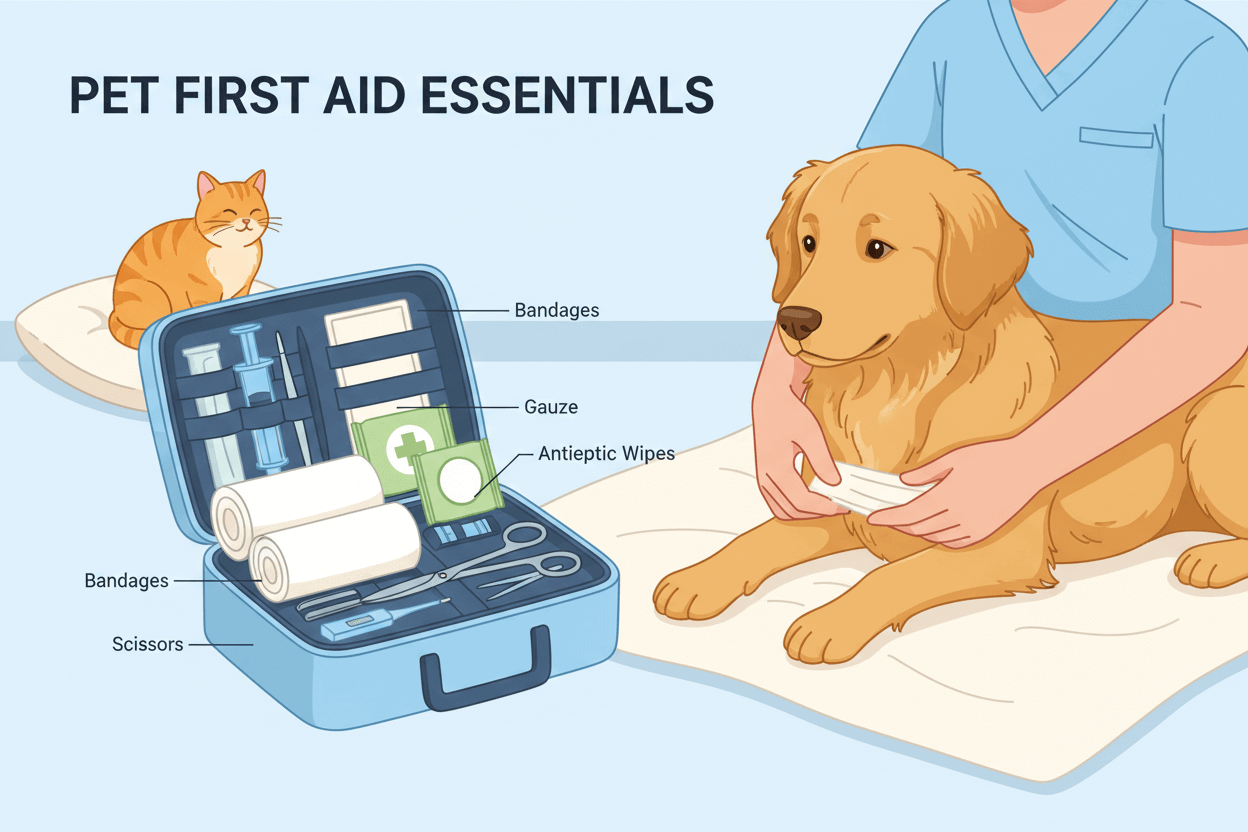
A well-stocked kit eliminates the frantic search for supplies during a crisis. Experts recommend keeping a kit that is compact, visible, and updated annually. Key components include:
- Gauze and Non-stick Pads: For wound coverage and pressure.
- Saline Solution: For gentle debris removal and wound flushing.
- Blunt-tipped Scissors and Tweezers: For cutting bandages or removing small debris.
- Digital Thermometer: Essential for checking for fever or heatstroke.
- Towels or Blankets: These serve as a restraint, a stretcher, and a way to conserve body heat in shock victims.
A useful mnemonic to remember for common injuries is “Clean, Cover, Control, and Carry.” Use saline to clean, pads to cover, wraps to control bleeding, and a towel to support the pet as you carry them to the vehicle.
Managing Specific Emergencies: From Choking to Heatstroke
Airway Obstructions
Choking is characterized by frantic pawing at the mouth and gagging with minimal airflow. If the pet is coughing but air is moving, it is often safer to stay calm and transport them immediately. If the airway is completely blocked, a brief mouth check is permissible, but you must never push the object deeper. Airway issues escalate rapidly because fear increases the body’s demand for oxygen, creating a dangerous cycle of distress.
Bleeding and Trauma
When dealing with active bleeding, apply firm, direct pressure with a clean cloth. Do not lift the cloth to check if the bleeding has stopped; this can disturb the initial clot. If blood soaks through, add another layer on top. For suspected fractures or spinal injuries, the rule is minimal motion. Use a rigid board or a taut blanket as a stretcher to maintain alignment during the drive to the vet.
Environmental Hazards: Heatstroke and Poisoning
With global temperatures rising, heat distress has become a leading cause of emergency visits. Signs include heavy panting, drooling, and confusion. Never use ice-cold water to cool a pet, as this can cause blood vessels to constrict and trap heat in the core. Use cool water and a fan to facilitate evaporative cooling. In cases of poisoning, document the substance (take the packaging with you!) and never induce vomiting unless specifically directed by a toxicologist or veterinarian, as certain chemicals can cause more damage when coming back up.
Case Study: The Impact of Rapid Response
In a 2024 case study involving a Golden Retriever who ingested a high volume of dark chocolate, the owner’s decision to call the vet within five minutes of discovery and bring the packaging led to a 100% recovery. The vet was able to calculate the exact toxicity levels before the dog even arrived, highlighting that information is a form of first aid. Contrastingly, pets given “home antidotes” or human painkillers like ibuprofen (which is highly toxic to pets) often face much bleaker outcomes due to secondary organ failure.
Expert Review: The Final Verdict
Veterinary emergency specialists agree that the most successful outcomes are driven by owners who act as first responders rather than doctors. The goal of the first 10 minutes is to stop the clock. By maintaining the ABCs and ensuring safe transport, you are giving the clinical team the best possible chance to save your pet’s life. Always prioritize professional care over home experiments.
Frequently Asked Questions (FAQ)
1. Can I give my pet human aspirin for pain during an emergency?
No. Never administer human medications. Drugs like ibuprofen, acetaminophen, and aspirin can cause fatal kidney failure or gastric ulcers in pets. Pain management must be handled by a veterinarian.
2. How do I know if my pet is in shock?
Look for a combination of signs: pale or white gums, a rapid but weak pulse, cool paws, and extreme lethargy or collapse. If you suspect shock, keep the pet warm and seek emergency care immediately.
3. What should I do if my pet is having a seizure?
Clear the area of hard objects to prevent injury. Do not put your hands in or near their mouth, as they may bite involuntarily. Time the seizure and call your vet immediately after it ends, or transport if it lasts longer than 3 minutes.
4. Is it okay to use hydrogen peroxide on a wound?
While commonly used in the past, hydrogen peroxide can actually damage healthy tissue and delay healing. Sterile saline or plain, clean water is preferred for the initial rinse before professional treatment.
5. How can I safely transport a large dog with a leg injury?
Use a large towel or a sturdy blanket as a sling under the belly to help the dog walk on three legs, or use a flat piece of plywood as a stretcher if they cannot stand.
Conclusion
The first 10 minutes of a pet emergency are a test of preparation and composure. By understanding the fundamentals of first aid—focusing on safety, stability, and speed—you become a vital link in your pet’s chain of survival. Remember to keep your first aid kit ready, know the signs of respiratory and circulatory distress, and always have your veterinarian’s emergency number on speed dial. Your quick, informed actions are the greatest gift you can give your pet in their moment of need.


1 comment