Every year on October 21st, reptile enthusiasts around the globe pause to celebrate Reptile Awareness Day. It is a day dedicated to education, conservation, and appreciation for the scaled wonders that share our planet. As a long-time keeper and exotic pet blogger, I have seen the public perception of reptiles shift from fear to fascination. Among the many species that have captured the hearts of keepers, none has a story quite as miraculous or a face quite as charming as the Crested Gecko. Whether you are a seasoned herpetologist or someone looking to welcome your first cold-blooded companion, Reptile Awareness Day is the perfect time to dive deep into the world of these ‘eyelash’ lizards.
For many of us in the community, the Crested Gecko (Correlophus ciliatus) represents the ‘comeback kid’ of the animal kingdom. Once thought to be extinct for decades, they were rediscovered in 1994 following a tropical storm in New Caledonia. Since that fateful re-emergence, they have skyrocketed in popularity, becoming perhaps the most recommended beginner reptile in the world. Their gentle nature, unique physical traits, and relatively simple care requirements make them a standout choice for families and apartment dwellers alike. In this comprehensive guide, we will explore everything you need to know about honoring these creatures through responsible and informed care.
The Miracle of Rediscovery and New Caledonian Roots
The history of the Crested Gecko is truly the stuff of legends. For nearly a century, scientists believed this species had vanished from the face of the Earth. When they were found again in the mid-90s, the herpetological world was stunned. Native only to the islands of New Caledonia, these geckos live in a lush, subtropical environment. Understanding their origin is the first step in providing a high-quality life for them in captivity. They are evolved for life in the canopy, thriving in the humid, moderate temperatures of the island chain.
Because they come from such a specific geographical niche, their biological needs are very distinct from desert-dwelling reptiles like Bearded Dragons or Leopard Geckos. They don’t need scorching heat; instead, they prefer the ‘goldilocks’ zone of room temperature. This evolutionary background is why they have become so popular in modern homes—our comfort levels often align perfectly with theirs. When we celebrate Reptile Awareness Day, we are celebrating the resilience of species like the Crested Gecko that managed to survive in the wild against all odds.
Physical Wonders: Eyelashes, Toe Pads, and Prehensile Tails
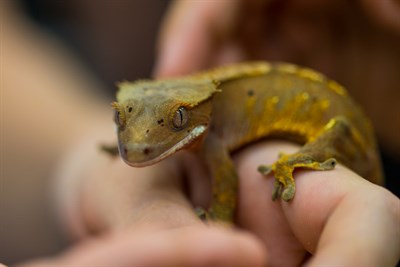
One look at a Crested Gecko and you will understand why they are often called ‘Eyelash Geckos.’ They possess small, soft projections over their eyes that look remarkably like long, lush lashes. However, unlike us, these geckos lack movable eyelids. To keep their eyes clean and moist, they use their long, flat tongues to lick their eyeballs—a behavior that never fails to fascinate (or slightly gross out) new owners. This is a critical anatomical feature to monitor; if a gecko’s eyes look cloudy or sunken, it is often a sign of dehydration.
Beyond their eyes, their ‘sticky’ feet are a marvel of biological engineering. Their toe pads are covered in millions of microscopic hairs called setae, which utilize Van der Waals forces to bond with surfaces at a molecular level. This allows them to walk up glass, plastic, and smooth leaves with ease. To compliment this, they also possess a prehensile tail that acts like a fifth limb, helping them navigate the vertical world of the forest. However, owners should be aware of ‘caudal autotomy’—the ability to drop their tail if they feel threatened. Unlike many other geckos, a Crested Gecko’s tail does not grow back. While a ‘frog butt’ gecko (one without a tail) lives a perfectly healthy life, it is a reminder to handle these delicate creatures with care and respect.
Creating a Vertical Paradise: Habitat and Housing
When setting up a home for your gecko, you must think vertically. In the wild, these animals rarely touch the forest floor. Therefore, a tall enclosure is much more valuable than a wide one. For a single adult, a 20-gallon ‘high’ tank is the absolute minimum, though many keepers are now moving toward 30-gallon or even 40-gallon vertical enclosures to provide more enrichment and movement space. Maintaining a safe environment is the most important part of ownership, and being prepared for emergencies as a small pet owner ensures that your gecko remains safe even during unexpected events like power outages.
Inside the enclosure, you should provide a dense network of climbing branches, bamboo stalks, and foliage. Both live and silk plants work well, but live plants like Pothos or Sansevieria (Snake Plants) help naturally maintain humidity levels. Substrate should be moisture-retentive, such as coconut husk fiber or a bioactive soil mix. Avoid using sand or gravel, as these can cause impaction if swallowed during hunting. A well-designed habitat isn’t just about aesthetics; it’s about providing the security a gecko needs to sleep soundly during the day and explore confidently at night.
The Critical Role of Temperature and Humidity
One of the biggest mistakes new keepers make is over-heating their Crested Geckos. These reptiles are extremely sensitive to high temperatures. Ideally, their enclosure should stay between 72°F and 78°F. If temperatures rise above 82°F for an extended period, it can lead to heat stroke and even death. In most homes, standard room temperature is sufficient, meaning you often won’t need a specialized heat lamp unless your house gets particularly cold in the winter.
Humidity is the other side of the coin. Crested Geckos require a humidity cycle. You should mist the tank heavily at night to bring the humidity up to 80-90%, allowing it to dry down to about 50% during the day. This ‘dry out’ period is vital to prevent the growth of mold and bacteria in the enclosure. Providing a shallow water dish is also recommended, though most geckos prefer to drink droplets of water off the leaves after a misting session. Using filtered or dechlorinated water is best to prevent mineral buildup on the glass and ensure the health of your pet.
Nutrition: The Modern Convenience of the Crested Gecko Diet
Historically, keeping fruit-eating geckos was a challenge because it was difficult to balance their calcium and vitamin intake using only fresh fruit and insects. Today, we have the benefit of scientifically formulated ‘Crested Gecko Diets’ (CGD) in powder form. Brands like Pangea and Repashy offer complete nutrition that only requires the addition of water. These diets contain the perfect ratio of proteins, fats, and essential minerals like Calcium and Vitamin D3, which are crucial for preventing Metabolic Bone Disease (MBD).
While the powdered diet is a staple, offering live insects like calcium-dusted crickets or Dubia roaches once or twice a week is excellent for mental enrichment and growth, especially for juveniles. Watching a gecko ‘hunt’ is a highlight of ownership and honors their natural instincts. If you are caring for a multi-pet household, ensure that your gecko’s feeding station is secure and that other curious pets, like cats or dogs, cannot interfere with the gecko’s habitat or stress them out during their active nighttime hours.
Temperament and Handling: Building a Bond
Crested geckos are widely regarded as one of the most docile reptiles. However, they are also ‘jumpy.’ They have a habit of launching themselves into the air without a clear landing plan—a behavior affectionately known as the ‘leap of faith.’ When handling a gecko, it is best to use the ‘hand-over-hand’ method, allowing the gecko to walk from one hand to the other. Handing should be kept brief in the beginning (5-10 minutes) until the gecko becomes accustomed to your scent and touch.
Juveniles tend to be more flighty and nervous, while adults usually settle down and are content to sit on a shoulder or hand while you watch TV. It is important to remember that reptiles do not ‘love’ us in the way a dog does, but they certainly learn to trust us. This bond is a unique form of companionship that can last a long time, as these geckos can live 15 to 20 years with proper care. Knowing how pets improve your health can make the long-term commitment of a gecko feel even more rewarding, as the calm act of habitat maintenance and observation can be a wonderful stress-reducer.
People Also Ask
Do Crested Geckos need UVB light?
While Crested Geckos can survive without UVB if their diet contains Vitamin D3, modern research suggests they benefit significantly from low-level UVB lighting (such as a 2.4% or 5% T5 bulb). It can improve their immune system, activity levels, and natural coloration. If you choose to provide UVB, ensure there are plenty of shady spots for the gecko to hide.
Why is my Crested Gecko hiding all day?
Crested Geckos are crepuscular, meaning they are most active at dawn and dusk. During the day, their natural instinct is to hide in thick foliage to avoid predators. If your gecko is hiding, it’s actually a sign that they feel secure in the spots you’ve provided. They will come out to explore once the lights go down!
Can two Crested Geckos live together?
As a general rule, Crested Geckos should be housed solitarily. Males will fight aggressively, often resulting in serious injury or death. While some experienced keepers house females together, it requires a massive enclosure and constant monitoring for signs of bullying or ‘resource guarding.’ For the average pet owner, keeping them alone is the safest and happiest option for the gecko.
Expert Verdict: Why the Crested Gecko Wins Every Time
In my professional opinion, the Crested Gecko is the gold standard for the modern reptile hobbyist. They bridge the gap between ‘living art’ and ‘interactive pet.’ They don’t require the expensive, high-wattage lighting that many other reptiles do, and their diet is arguably the easiest to manage in the entire exotic pet world. On this Reptile Awareness Day, we recognize that keeping a gecko is more than just a hobby—it is an act of stewardship for a species that we almost lost forever.
If you are looking for a pet that is quiet, fascinating to observe, and relatively low-maintenance, the ‘eyelash gecko’ is your perfect match. By following the guidelines of proper vertical spacing, humidity cycling, and balanced nutrition, you can ensure your scaly friend thrives for decades to come. Let’s use this day to spread the word about these incredible creatures and ensure they are never ‘lost’ again.
Actionable Conclusion for New Owners
- Invest in Height: Choose a vertical tank (minimum 18x18x24 inches for an adult).
- Monitor the Humidity: Buy a reliable hygrometer; don’t just guess. The 50% to 80% cycle is non-negotiable.
- Quality Over Quantity: Stick to high-quality prepared diets like Pangea or Repashy.
- Be Patient: Let your new friend acclimate to their home for at least two weeks before starting a handling routine.


