In the lush landscapes of ancient Siam, now modern-day Thailand, the Korat cat was once considered more than just a pet; it was a living talisman of prosperity and good fortune. Known as the “Si-Sawat” cat, these silver-blue beauties have a history that stretches back to the 14th century, appearing in the celebrated Tamra Maew (The Cat-Book Poems). Unlike many modern breeds that were engineered by breeders, the Korat is a natural breed, its striking features and sharp intelligence honed by nature rather than human selection. Today, the Korat remains a rare and cherished companion, beloved for its intense loyalty, heart-shaped face, and a shimmering coat that seems to capture the light of the moon. Whether you are a seasoned feline enthusiast or a prospective owner seeking a deep, lifelong bond, the Korat offers a unique blend of ancient mystery and modern-day devotion.
The Ancient Heritage of the Korat Cat
The Korat’s story begins in the Khorat province of Thailand. Historically, these cats were never bought or sold; they were only given as gifts, often to brides to ensure a happy and fruitful marriage. Their silver-tipped fur was said to represent wealth, while their sea-green eyes symbolized a bountiful harvest. The first recorded Korats arrived in the United States in 1959, a pair named Nara and Darra, gifted to an American couple from a Thai friend. This set the stage for their recognition by the Cat Fanciers’ Association (CFA) in 1966.
Unlike the Siamese, which became famous for its sleek, elongated lines, the Korat has maintained its “semi-cobby” and compact stature. When you pick up a Korat, you are often surprised by their weight; they are described as being like “coiled springs,” muscular and solid despite their medium frame. This physical prowess is a testament to their survival as a natural breed in the wilds and temples of Southeast Asia. To ensure your Korat thrives in a modern home, comprehensive strategies for supporting feline wellness are essential to honor their long-standing heritage.
The Five Hearts: Distinctive Physical Traits
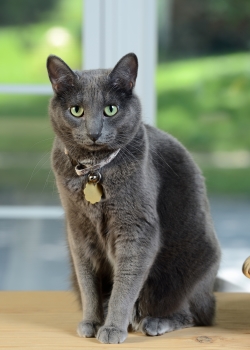
Breed enthusiasts often refer to the Korat as the cat with “five hearts.” If you look closely at their conformation, you can find heart shapes in several places: the head (when viewed from the front), the top of the head, the nose, the chest, and the heart itself. This romantic imagery matches their affectionate personality perfectly. Their most striking feature, however, is their coat. The Korat possesses a single coat—meaning they lack a downy undercoat—which lies close to the body and feels like silk. The color is exclusively silver-blue, where each hair is tipped with silver, creating a halo effect known as “shimmering.”
Their eyes are equally captivating. Born with amber or yellow-toned eyes, the Korat’s gaze transitions into a brilliant, luminous green as they reach maturity (usually around two to four years of age). These large, prominent eyes give them an expression of intense alertness. Because they lack a thick undercoat, they are often more tolerable for people with mild allergies, though they are not strictly hypoallergenic. Their grooming needs are minimal, usually requiring only a weekly brushing to remove loose hairs and maintain that signature silver sheen.
Personality and Temperament: A Sensitive Companion
If you are looking for an independent cat that ignores you until dinner time, the Korat is not for you. This breed is famously “home-oriented” and forms an incredibly strong attachment to its primary caregivers. They are highly intelligent and observant, often following their owners from room to room to “supervise” household activities. However, their intelligence comes with a high level of sensitivity. Korats are known to be sensitive to loud noises and sudden movements. They possess an acute sense of hearing and smell, making them excellent “watch-cats” who will alert you to any changes in their environment.
While they are gentle and affectionate, they can be territorial. In a multi-pet household, the Korat often insists on being the “alpha.” They are generally good with children who understand how to handle animals with respect, but they may resist being restrained or held against their will. Early socialization is critical for this breed to ensure they remain confident and well-adjusted. Because they are so vocal and expressive, understanding the nuances of feline body language is incredibly helpful for Korat owners to decipher their pet’s specific needs and moods.
Health and Longevity: What Owners Should Know
The Korat is generally a hardy breed with a lifespan often reaching 15 to 19 years. However, like all purebred cats, they are prone to certain genetic conditions. The most significant concern for the Korat is GM1 and GM2 gangliosidosis, a rare but fatal genetic metabolic disorder that affects the nervous system. Fortunately, responsible breeders now use DNA testing to identify carriers, nearly eliminating the disease from the modern breeding pool. Always ask your breeder for documentation of these tests.
Beyond genetics, Korats are prone to standard feline issues like periodontal disease and obesity. Their compact, muscular frames can hide weight gain easily, so monitoring their caloric intake is vital. Because they are sensitive to their surroundings, stress-related urinary issues can also occur. Maintaining a clean and consistent environment is paramount, which includes selecting a litter that caters to their sensitive nature and keeping the litter box in a quiet, low-traffic area of the home.
Expert Verdict: Is the Korat Right for You?
Expert veterinarians, including Dr. Fiona Lee, DVM, note that the Korat is a “thinking person’s cat.” They require mental stimulation and do not do well when left alone for long periods. If you work long hours, it is often recommended to have a second cat (preferably another Korat or a similarly active breed) to keep them company. They are highly trainable and can learn to fetch, walk on a leash, and even solve puzzle feeders. The Korat is a premium breed for those who want a deeply interactive relationship with a pet that is as beautiful as it is brilliant.
Frequently Asked Questions (FAQ)
- Are Korat cats the same as Russian Blues? No. While both have silver-blue coats, the Korat has a single coat, heart-shaped head, and green eyes, whereas the Russian Blue has a double coat, a more wedge-shaped head, and a different body type.
- Do Korats shed a lot? Because they have no undercoat, they shed very little compared to other breeds, making them very easy to groom.
- Are they good with dogs? Yes, provided the dog is cat-friendly and the Korat is introduced slowly. The Korat will likely want to be the boss of the dog.
- Why is my Korat’s eye color changing? It is normal for Korats to have amber or yellow eyes as kittens; the vivid green color develops fully by the time they are 2 to 4 years old.
- Can Korats live in small apartments? Yes, as long as they have plenty of vertical space (cat trees) and interactive toys to keep their minds busy.
Conclusion
The Korat cat is a masterpiece of nature, combining the elegance of ancient Siam with a personality that is fiercely loyal and deeply affectionate. Owning a Korat is a long-term commitment that rewards the owner with a level of companionship rarely seen in the feline world. Their striking silver-blue coat and luminous green eyes may catch your eye, but it is their “five hearts” and their unwavering devotion that will capture your own heart. By providing them with a stable environment, proper healthcare, and plenty of love, you can ensure that this “good luck cat” brings joy and prosperity to your home for many years to come.


