Introduction to the Scottish Terrier
The Scottish Terrier, affectionately known as the ‘Scottie,’ is perhaps one of the most recognizable dog breeds in the world. With its distinctive profile, upright ears, and dignified beard, this small but mighty terrier has captured the hearts of families and world leaders alike—including U.S. President Franklin D. Roosevelt, whose companion Fala became a national icon. Often referred to as the ‘Diehard’ due to its rugged persistence and brave spirit, the Scottish Terrier is a breed that exudes confidence and independence. Originating from the harsh landscapes of the Scottish Highlands, these dogs were bred to hunt vermin and badgers, a history that still influences their personality today. Whether you are looking for a loyal companion for city living or a watchful guardian for a suburban home, the Scottie offers a unique blend of intelligence and charisma that is hard to find elsewhere. In this guide, we will explore the depths of the breed’s history, health needs, and why they remain a favorite in 2024.
The History of the Scottish Highlands’ Guardian
The Scottish Terrier’s roots are deep in the rugged terrain of Scotland. Historically, several breeds of terriers were grouped together under the umbrella of ‘Skye Terriers,’ but by the late 19th century, distinct breeds began to emerge. The Scottish Terrier as we know it was refined in the Aberdeen area, leading many to call it the ‘Aberdeen Terrier’ in its early years. They were meticulously bred for their ability to go to ground, facing off against tough prey like foxes and badgers. This required a dog with an exceptionally strong jaw, a sturdy frame, and a coat that could withstand the damp, cold climate of the Highlands. By the time they reached American shores in the late 1800s, they had already established a reputation for being ‘cannie’—a Scottish word for clever and shrewd. Today, they are celebrated not just for their hunting prowess, but for their role as a distinguished and deeply loyal family member.
Physical Characteristics and the Iconic Silhouette
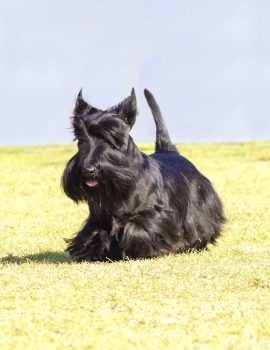
The Scottie is a small, compact, and short-legged dog that possesses surprising strength. Their most famous feature is their double coat, which consists of a dense, soft undercoat and a hard, wiry outer coat. This combination provided essential protection for their ancestors in the brush. While most people immediately think of the color black when they imagine a Scottish Terrier, they also come in wheaten (a pale yellow or cream color) and various shades of brindle. Their long head is adorned with small, erect ears and deep-set, almond-shaped eyes that sparkle with intelligence and a touch of mischief. A well-groomed Scottie features ‘furnishings’—the long hair on the legs, beard, and eyebrows—that give them their signature sophisticated look. Despite their small stature, they typically weigh between 18 and 22 pounds, making them a ‘big dog in a small body’ that is robust enough for outdoor adventures.
Understanding the Scottie Temperament
The personality of a Scottish Terrier is often described as ‘aloof but loyal.’ Unlike many other small breeds that may be overly excitable or ‘yappy,’ the Scottie is generally reserved and dignified. They are deeply devoted to their primary family members but can be cautious around strangers. This independence is a hallmark of the breed; they are thinkers who often assess a situation before acting. However, owners should be aware that their high prey drive remains intact. They are prone to chasing squirrels or other small animals, which is why creating a pet-friendly home environment with a secure, fenced yard is essential. While they can be stubborn, their affection for their owners is profound, though they prefer to show it on their own terms rather than through constant fawning.
Health and Longevity: 2024 Data and Insights
Scottish Terriers are generally healthy dogs with a lifespan of 12 to 15 years, but like all purebreds, they are susceptible to certain genetic conditions. One unique condition is known as ‘Scottie Cramp,’ a harmless but startling neurological disorder that affects walking when the dog is excited. More seriously, researchers have noted that Scotties have a higher-than-average risk for Transitional Cell Carcinoma (TCC), a type of bladder cancer. Statistics from 2024 indicate that early screening and a diet rich in vegetables can significantly reduce risks. They are also prone to Von Willebrand’s disease, a blood clotting disorder. Because of these potential risks, many owners opt for pet insurance to manage costs. In the landscape of modern veterinary care, knowing the top 5 dangerous dog diseases that require quick vet intervention is vital for every Scottie owner to ensure a long, healthy life for their pet.
Training and Socialization Challenges
Training a Scottish Terrier requires patience, consistency, and a sense of humor. They are highly intelligent but possess a streak of independence that can be mistaken for stubbornness. They do not respond well to harsh corrections; instead, positive reinforcement through treats and praise is the key to success. Early socialization is crucial to prevent them from becoming too wary of other dogs or people. Enrolling your puppy in a class is a great start, as there are at least 8 reasons why dog training is so important for building a confident, well-adjusted pet. Focus on recall training, although it is often recommended to keep a Scottie on a leash in unfenced areas due to their instinct to follow a scent or a moving object regardless of commands.
Grooming and Maintenance Requirements
Maintaining the iconic Scottie look requires a commitment to regular grooming. Their wire coat needs to be brushed at least twice a week to prevent mats and tangles. For show dogs, the coat is ‘hand-stripped’ to maintain its texture, but for most companion pets, professional clipping every six to eight weeks is sufficient. Owners should pay close attention to their beard, which can trap food and moisture, and their nails, which grow quickly. Regular dental care and ear cleaning are also essential parts of their hygiene routine. While they are considered a low-shedding breed, they are not strictly hypoallergenic, though they are often better tolerated by allergy sufferers than many other breeds.
Expert Verdict: Is the Scottie Right for You?
The Expert Review: The Scottish Terrier is a magnificent breed for the right owner. They are best suited for individuals or families who appreciate a dog with a strong personality and do not mind a companion that isn’t constantly seeking approval. They are excellent for apartment living due to their moderate exercise needs but require mental stimulation to stay happy. Pros: Highly loyal, minimal shedding, great watchdogs, and very sturdy. Cons: Can be stubborn, high prey drive, and potential for specific health issues. In 2024, the Scottie remains a top choice for those seeking a ‘big personality’ in a manageable size.
Frequently Asked Questions (FAQ)
- Do Scottish Terriers bark a lot? They are not habitual barkers, but they are excellent watchdogs and will bark to alert you of someone approaching the home.
- Are they good with children? Scotties are generally good with older children who understand how to respect a dog’s boundaries. They may be less tolerant of the rough play associated with toddlers.
- How much exercise do they need? A brisk daily walk and some playtime in a fenced area are usually enough to satisfy their physical needs.
- Can they live with cats? If raised with them from puppyhood, many Scotties can coexist with cats, but their high prey drive may lead them to chase unfamiliar felines.
- Why are they called the ‘Diehard’? The nickname was given by George, the fourth Earl of Dumbarton, who was impressed by the breed’s bravery and persistence in the field.
Conclusion
The Scottish Terrier is more than just a dog with a famous silhouette; it is a breed of substance, history, and unwavering loyalty. While they require a dedicated grooming schedule and a firm hand in training, the reward is a companion that will stand by your side with unmatched devotion. By understanding their unique health needs and respecting their independent nature, you can enjoy a deep and fulfilling relationship with this Highland legend. Whether they are trotting through a city park or relaxing by your feet at home, the Scottie remains one of the most dignified and delightful members of the canine world.


