When you first encounter a Cornish Rex, you might feel as though you have stepped into a science fiction novel or a high-fashion runway show. With their distinctive egg-shaped heads, oversized ears, and uniquely crimped fur, these felines are truly unlike any other breed in the world. Often referred to as the “Greyhounds of the cat kingdom,” the Cornish Rex combines an elegant, svelte physique with a personality that is perpetually stuck in kitten mode. For those seeking a sedentary lap ornament, this breed might be a shock; however, for active families and individuals who crave interactive companionship, the Cornish Rex is arguably one of the most rewarding pets one could ever hope to own. Their history is as unique as their appearance, rooted in a serendipitous genetic mutation in the English countryside that forever changed the landscape of feline fancy.
The Storied History of the Cornish Rex
The history of the Cornish Rex began not in a laboratory, but in a simple barn in Cornwall, England, in 1950. A cream-colored kitten named Kallibunker was born to a non-pedigreed tortoiseshell-and-white farm cat. What set Kallibunker apart from his littermates was his remarkably short, curly coat. Recognizing the kitten’s unique appearance, his owner, Nina Ennismore, consulted with geneticists who confirmed that the curly coat was the result of a spontaneous recessive mutation. To preserve this rare trait, Kallibunker was bred back to his mother, eventually producing more curly-coated kittens and establishing the foundation for the breed we know today.
As the breed evolved, it was crossed with Siamese, Burmese, and British Shorthairs to broaden the gene pool and refine its elegant silhouette. By the early 1960s, the breed had gained official recognition in the United Kingdom and eventually made its way to the United States. Today, while still considered a relatively rare breed compared to giants like the Maine Coon, the Cornish Rex enjoys a dedicated global following. In 2024, it remains a favorite among cat show enthusiasts and families alike for its distinct lack of shedding and its “clownish” demeanor.
Physical Characteristics: A Masterpiece of Feline Design
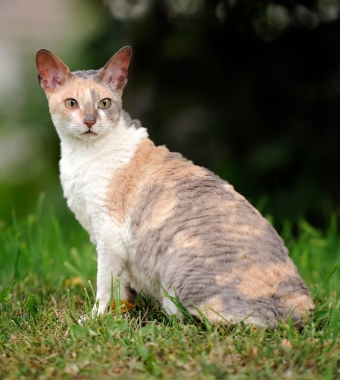
The Cornish Rex is a medium-sized cat, typically weighing between 6 and 8 pounds, though their slender build often makes them look smaller. They possess a high-arched back, a narrow waist, and surprisingly long, sturdy legs that allow them to leap to incredible heights. Their heads are characterized by a narrow muzzle, high cheekbones, and a “Roman nose,” topped with large, bat-like ears that are set high on the head.
However, the most striking feature of the Cornish Rex is its coat. Unlike most cats, which have three layers of fur—guard hairs, awn hairs, and down hair—the Cornish Rex possesses only the soft, insulating undercoat. This coat is arranged in tight, uniform waves known as the “Marcel wave,” a term borrowed from a popular 1920s hairstyle. This lack of guard hairs makes the Cornish Rex feel incredibly soft to the touch, often compared to crushed velvet or rabbit fur. Because they lack a traditional coat, they are warm to the touch, and many owners describe them as “living hot water bottles.”
The Difference Between Standards
It is worth noting that English and American breed standards differ slightly. The European version tends to be a bit heavier and sturdier, while the American Cornish Rex is often more extreme in its slenderness and ear size. Regardless of the standard, the breed is accepted in almost every imaginable color and pattern, including solids, tabbies, tortoiseshells, and pointed patterns.
Personality and Temperament: The Eternal Kitten
If you are looking for a cat that will sit quietly on a shelf, keep looking. The Cornish Rex is high-energy, highly intelligent, and famously vocal. They are known for their “dog-like” qualities, often following their owners from room to room and demanding to be part of every activity. These cats are prolific talkers; they will chirp, trill, and meow to express their needs, their excitement, or just to comment on the state of the household. To better understand these sounds, you can explore our guide on the art of cat communication.
One of the most endearing traits of the Cornish Rex is their playfulness. They are incredibly dexterous and have been known to use their paws like little hands to open cabinets or pick up small objects. They love to play fetch, learn tricks, and can even be trained to walk on a leash. Because they are so social, they do best in environments where they are not left alone for long periods. They are excellent candidates for multi-pet households, as they generally get along well with other cats and even cat-friendly dogs.
Health and Wellness: Protecting Your Rex
While the Cornish Rex is generally a hardy breed with a lifespan of 12 to 15 years, they are prone to certain genetic conditions. Because of their thin coats, they are highly sensitive to temperature and can easily become chilled or sunburned. Skin issues are common, particularly seborrhea, which is caused by an accumulation of oils on the skin that a normal coat would typically absorb.
Other health concerns to watch for include:
- Hypertrophic Cardiomyopathy (HCM): A form of heart disease that thickens the heart walls.
- Patellar Luxation: A condition where the kneecap slips out of place.
- Hypotrichosis: A condition that can lead to patchy hair loss or thinning of the coat.
Recent veterinary data suggests that routine screenings and a high-quality diet are essential for managing these risks. Many owners opt for pet insurance to mitigate the costs of specialized veterinary care, as modern treatments for feline heart conditions have improved significantly through 2024.
Grooming and Daily Care
One of the most common misconceptions is that the Cornish Rex is hypoallergenic. While they shed very little and produce less dander than heavy-coated breeds, they still produce the Fel d 1 protein found in cat saliva, which is the primary allergen for humans. However, their minimal shedding makes them much easier to manage for people with mild allergies.
Grooming needs are minimal but unique. Because they lack guard hairs to absorb skin oils, their skin can become greasy, and they may require occasional baths to prevent skin irritation. When bathing, it is crucial to use a gentle, cat-specific shampoo to avoid stripping their sensitive skin of essential moisture. For a step-by-step approach, refer to our article on how to give your cat a bath.
Expert Verdict
The Cornish Rex is a “specialist” cat. They are ideal for active individuals, families with children, and those who want a truly interactive pet. Their intelligence and high energy levels require a commitment to mental stimulation and physical play. However, if you provide them with a warm home, plenty of vertical space to climb, and an abundance of affection, they will reward you with a lifetime of entertainment and loyalty. They are truly the “clowns” of the feline world, ensuring there is never a dull moment in your home.
Frequently Asked Questions (FAQ)
Are Cornish Rex cats truly hypoallergenic?
No cat is 100% hypoallergenic. However, because the Cornish Rex has a very short coat and sheds significantly less than other breeds, they may be better tolerated by some allergy sufferers. It is always recommended to spend time with the breed before bringing one home.
Do they need sweaters in the winter?
Yes! Because they lack a protective outer coat, Cornish Rex cats feel the cold much more than other breeds. They will naturally seek out warm spots like sunny windowsills, laptops, or your lap. In colder climates, a cat sweater can help keep them comfortable.
How much exercise do they need?
The Cornish Rex is extremely active. They require daily interactive play sessions with toys like feather wands or laser pointers. They also benefit from having cat trees and shelves to satisfy their natural urge to climb and jump.
Are they good with children?
Generally, yes. Their playful and social nature makes them excellent companions for children who know how to handle animals gently. Because they are sturdy and athletic, they can keep up with the energy levels of a busy household.
Conclusion
The Cornish Rex is a testament to the wonders of feline genetics—a slender, curly athlete with the heart of a kitten and the intelligence of a much larger animal. Whether they are performing acrobatic leaps or snuggling under your covers to steal your warmth, these cats leave an indelible mark on the lives of their owners. By understanding their unique needs regarding grooming, temperature control, and social interaction, you can ensure your Cornish Rex lives a long, vibrant, and happy life.


