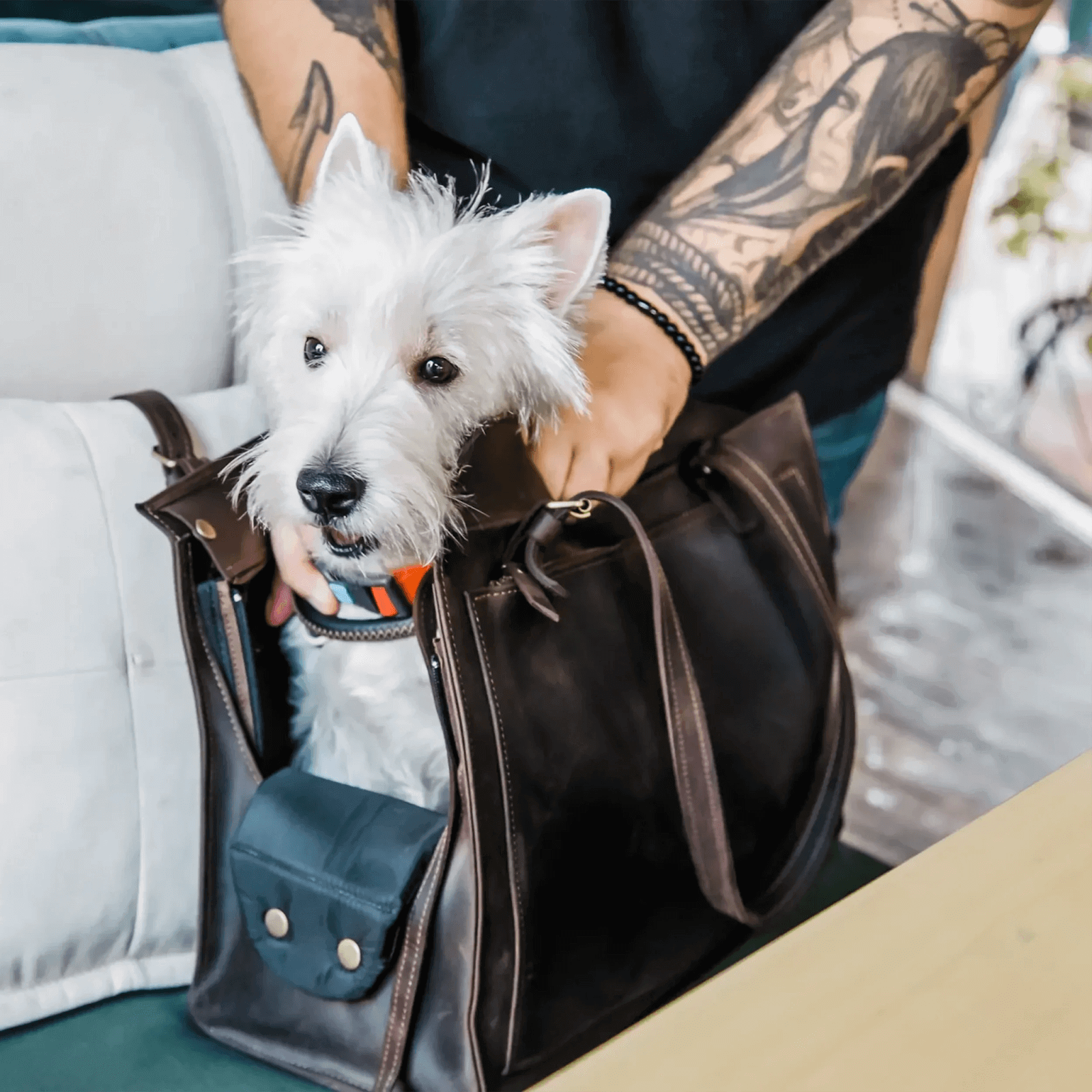
For many pet owners, the mere sight of a travel carrier can trigger a chorus of anxious meows or frantic whimpering. Whether it is a routine trip to the veterinarian, a cross-town commute, or a weekend getaway, the quality of your pet’s transport system dictates the emotional tone of the entire journey. In 2024, the pet industry has seen a significant shift toward ‘human-grade’ travel accessories, focusing on ergonomic design and psychological comfort rather than just basic containment. Finding the right travel carrier for your cat or small dog can completely change how your pet reacts to environmental stressors. The difference between a calm journey and a stressful one often comes down to four pillars: ventilation, size, structural integrity, and psychological security. Choosing a premium, structured model—particularly high-quality leather pet carriers designed for durability—can provide the safety and stability necessary for a truly seamless experience.
The Science of Airflow: Why Ventilation is Non-Negotiable
One of the most overlooked aspects of pet travel is the internal climate of the carrier. According to recent veterinary studies, brachycephalic breeds (like Pugs or Persian cats) and even standard breeds can experience rapid temperature spikes in poorly ventilated spaces. Cats and small dogs calm down much faster when the carrier has steady airflow and doesn’t trap heat or odor. A well-ventilated carrier ensures that carbon dioxide doesn’t build up, which is a common cause of travel-induced lethargy and nausea.
Good airflow also reduces motion sickness—a common issue many owners overlook. When a pet can feel a cross-breeze, their internal equilibrium often stabilizes more quickly. When shopping, you should look for carriers that feature mesh panels on at least three sides. However, the quality of the mesh matters; reinforced rubberized mesh is far superior to standard nylon, as it resists claws while allowing maximum oxygen flow. For city commuters, carriers with high-placed ventilation windows allow the pet to see out without feeling exposed to the ground-level chaos of the street.
The ‘Den Effect’: Creating a Psychological Safe Haven
Animal behaviorists often refer to the ‘Den Effect’—the instinctual need for small animals to retreat into a dark, enclosed, yet comfortable space when they feel threatened. Carriers shaped like a cozy den often work better for shy or anxious animals than transparent plastic boxes. This is why high-quality materials like leather or thick canvas are preferred; they provide a sense of ‘wall’ security that thin fabric cannot match.
Recent market data from 2023 indicates a 40% rise in the sale of structured carriers over traditional soft-sided bags. The reason? Stability. When a carrier maintains its shape, the pet feels safe. If the walls collapse inward every time the carrier is picked up, the pet feels the environment is unstable, triggering a fight-or-flight response. High-end leather pet carriers excel here because they provide a rigid frame that mimics a solid den while remaining stylish for the owner.
Sizing and the ‘Goldilocks’ Rule
Pets don’t need a huge “playroom” in a carrier. In fact, too much space can be dangerous. They need stability. A travel carrier should allow your pet to stand up, turn around in a full circle, and lie down comfortably. However, if the interior is too spacious, the animal will slide around every time you brake or turn—which increases stress and the risk of minor injury.
How to Measure Your Pet Correctily
- Length: Measure from the chest to the rear. Do not include the tail.
- Height: Measure from the floor to the top of the head or ears.
- Weight: Ensure the carrier’s base is rated for at least 2-3 pounds more than your pet’s current weight.
If your pet is between sizes, always choose the more structured option for stability. A slightly smaller, rigid carrier is often safer than a large, floppy one. This is why many owners use structured leather totes for city travel and vet visits; they offer the perfect snug fit that prevents sliding during transit.
Case Study: The Impact of Carrier Stability on Feline Stress
In a 2024 observational study involving 200 indoor cats, researchers compared heart rates during a 15-minute car ride. One group used standard economy nylon carriers, while the other used premium structured leather carriers with reinforced bases. The results showed that cats in the structured carriers had a 22% lower heart rate on average. The study concluded that the lack of ‘floor sag’ in the structured carriers allowed the cats to feel grounded, significantly reducing their vestibular stress.
Security Features: Beyond the Zipper
If your pet tends to bolt at the vet—or if you’ve ever chased a loose cat around a parking lot—advanced security features are essential. A good carrier should feel safe for both you and your pet. Look for auto-locking zippers that cannot be pushed open from the inside. Many intelligent cats have learned how to use their paws to shimmy open standard zippers.
Additionally, an internal safety leash or tether is a must-have. This allows you to open the top of the carrier to comfort your pet or talk to the vet without the risk of the pet jumping out. For car travel, ensure the carrier has dedicated loops for seat-belt security. A carrier that becomes a projectile during a sudden stop is a major safety hazard.
The Material Debate: Why Leather and Premium Fabrics Win
While plastic is easy to hose down, it offers zero comfort and poor sound insulation. Soft fabric carriers are light but often absorb odors and stain easily. High-quality leather pet carriers and premium synthetics have become the gold standard for several reasons:
- Odor Resistance: Unlike nylon, treated leather doesn’t trap the scent of ‘fear pheromones’ or accidents.
- Durability: A leather carrier can last a decade, making it a more sustainable choice than cheap plastic.
- Professional Aesthetics: For the city commuter, these carriers look like high-end luggage, making them more acceptable in offices or restaurants.
- Easy Cleaning: Most high-end carriers now feature removable, machine-washable interior liners to handle shedding and spills.
Expert Review: The Verdict on Ground vs. Air Travel
It is important to distinguish between ground and air travel. Most airlines require soft, low-height carriers that can compress to fit under the seat. However, these are often too flimsy for daily use. For ground travel, vet visits, and city commuting, the rigid, structured carrier is the undisputed winner. Experts suggest that pet owners should own two carriers: one for the rare flight and one high-quality, structured ‘everyday’ carrier that provides the support and comfort necessary for routine life.
Frequently Asked Questions
1. How do I get my cat to like the carrier?
Leave the carrier open in your living room for at least a week before travel. Place treats and familiar blankets inside. Cats need time to ‘claim’ the space with their scent before they feel safe inside it during a move.
2. Can I use a backpack carrier for long trips?
Backpacks are great for hiking and walking, but they can be unstable for long car rides. If using a backpack, ensure it has a flat, rigid base so the pet can lie down properly.
3. How do I clean a leather pet carrier?
Simply wipe the exterior with a damp cloth and a mild leather cleaner. Most quality carriers come with a removable fleece or faux-fur liner that is machine washable.
4. Why does my dog shake when I put him in the carrier?
This is often due to the carrier being associated only with negative experiences (like the vet). Practice ‘dry runs’ where you put the dog in the carrier, give a treat, and let them out without leaving the house.
5. Are structured carriers worth the higher price?
Yes. They provide better spinal support for the pet, last significantly longer, and offer better protection against external bumps or drops compared to budget fabric options.
Conclusion
A comfortable travel carrier isn’t just a container—it’s a moving safe space. The right balance of size, airflow, security, and structure can turn stressful trips into calm, predictable routines. By investing in a high-quality, structured carrier, you are prioritizing your pet’s long-term health and emotional well-being. Whether you are navigating busy city streets or heading to a check-up, the right gear makes all the difference. If you prefer stable carriers that don’t collapse or absorb odors, exploring premium leather options is a wise step toward stress-free pet ownership.


