The allure of the wild has always captivated the human imagination, and perhaps no feline embodies this fascination more than the California Spangled cat. Often mistaken for a miniature jungle predator, this breed was meticulously designed not just for its striking aesthetics, but for a profound conservationist purpose. Developed in the 1970s and 1980s by Hollywood scriptwriter Paul Casey, the California Spangled was intended to be a visual reminder of the endangered leopards in the wild. By bringing a ‘house leopard’ into the domestic sphere, Casey hoped that owners would become more emotionally invested in the protection of large wild cats. Today, while the breed remains relatively rare, it is celebrated by enthusiasts for its incredible athleticism, high intelligence, and surprisingly affectionate nature. Whether you are a fan of exotic aesthetics or looking for a high-energy companion, understanding the nuances of this breed is essential for any prospective owner.
The History and Visionary Origins of the California Spangled
The story of the California Spangled cat is one of Hollywood ambition and environmental advocacy. In 1971, while working in Africa, Paul Casey was struck by the devastating news that one of the last remaining leopards in a local canyon had been killed by poachers. This tragedy sparked an idea: if people could own a domestic cat that looked exactly like a leopard, the desire for leopard-skin rugs and coats might diminish. Unlike the Bengal, which was created by crossing domestic cats with Asian Leopard Cats, the California Spangled was bred entirely from domestic stock. Casey utilized a complex ‘recipe’ involving several breeds, including the Abyssinian, American Shorthair, British Shorthair, and even spotted street cats from Cairo and Malaya.
By the mid-1980s, the breed made its grand debut in the 1986 Neiman Marcus Christmas catalog, marketed as the ‘ultimate gift’ for a staggering price point. This commercial introduction was controversial, but it put the breed on the map. Despite its initial fame, the breed faced stiff competition from the rise of the Bengal cat, which had a more direct ‘wild’ lineage. Nevertheless, the California Spangled maintains a dedicated following today, prized for its unique breeding history and its status as a fully domestic cat with a purely wild look. When considering the social needs of such an active breed, it is often helpful to look at how they interact with other animals, such as keeping a cat and Labrador puppy together in a shared household.
Physical Characteristics: The ‘Mini Leopard’ Aesthetic
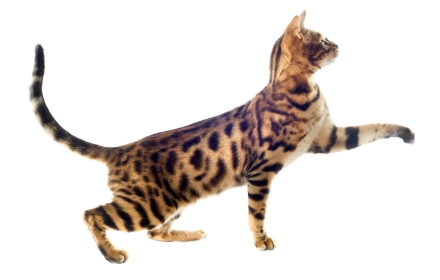
The California Spangled is a medium-sized cat with a strikingly long, lean, and muscular physique. Weighing between 8 and 15 pounds, they possess a ‘hunter’s gait’—a low-slung, prowling walk that mimics the movement of a leopard on the savanna. Their points of conformation are designed to emphasize power and agility. The head is sculpted with well-developed cheekbones, and the ears are medium-sized with rounded tips, adding to the wild appearance.
The most defining feature of the breed is, of course, the coat. It is short, velvety, and covered in distinct spots. Unlike the rosettes of a Bengal, the spots on a California Spangled can be triangular, square, or oval, appearing as though they were ‘spangled’ across the fur. The color palette is diverse, ranging from bronze and gold to charcoal, silver, and even red or blue. This variety ensures that every California Spangled is a unique work of art. To maintain the health and luster of this beautiful coat, owners should focus on supporting cat wellness through high-quality nutrition and regular hydration.
Temperament and Behavioral Traits
Do not let the wild appearance fool you; the California Spangled is known for being exceptionally social and affectionate. These are not ‘solitary’ cats; they thrive on human interaction and are often described as ‘velcro cats’ because they want to be involved in everything their owner does. They are highly intelligent and possess a sharp curiosity that requires constant stimulation. Because of their athletic builds, they are legendary jumpers. It is not uncommon to find a California Spangled perched on the highest shelf or the top of a door frame, surveying their ‘territory’ from above.
Their high intelligence makes them incredibly trainable. Many owners report success in teaching them to fetch, walk on a leash, or perform various tricks. However, this intelligence also means they can become easily bored. Destructive behavior is usually a sign of under-stimulation. Providing plenty of vertical space, interactive toys, and one-on-one play sessions is non-negotiable for this breed. They are also known for being quite vocal, using a range of chirps and trills to communicate their needs and desires to their human companions.
Living with a California Spangled: Care and Maintenance
In terms of grooming, the California Spangled is remarkably low-maintenance. Their short, sleek coat does not mat and requires only a weekly brushing to remove loose hair and maintain shine. However, their high energy levels mean that ‘care’ involves more than just grooming. These cats require an environment that allows them to climb and hunt. Cat trees, window perches, and puzzle feeders are essential tools for a happy Spangled.
Health-wise, the breed is generally robust, largely due to its diverse genetic background involving multiple domestic breeds. There are no breed-specific genetic diseases currently linked exclusively to the California Spangled. However, like all cats, they are prone to common feline issues such as hypertrophic cardiomyopathy (HCM) or dental disease. Regular veterinary check-ups and a clean litter environment are paramount. If you are introducing a new diet or environment, you might find it beneficial to transition your cat to a natural cat litter to minimize chemical exposure and support their overall respiratory health.
Expert Review and Verdict
Expert Review: The California Spangled is a masterpiece of selective breeding that achieved its goal of creating a wild-looking cat with a domestic heart. From a veterinary perspective, their lean muscle mass and active lifestyle contribute to a cat that, when properly fed, avoids many of the obesity-related issues seen in more sedentary breeds. However, they are not ‘starter cats.’ Their need for social engagement and physical exertion makes them best suited for active households where they won’t be left alone for long periods.
Verdict: If you are looking for a stunning, intelligent, and deeply loyal companion—and you have the time to dedicate to their play and social needs—the California Spangled is a world-class choice. They are essentially ‘dogs in cat suits,’ offering a level of interaction that is rare in the feline world.
Frequently Asked Questions (FAQ)
Are California Spangled cats rare?
Yes, they are considered quite rare today. The rise of the Bengal cat in the 1990s overshadowed the California Spangled, leading to a decline in breeders. Finding a purebred California Spangled often requires contacting specialized breed preservationists.
Do they have wild DNA?
No. Unlike Bengals or Savannahs, the California Spangled was bred entirely from domestic cat breeds. This makes their wild appearance a triumph of selective breeding rather than hybridization.
Are they good with children?
Generally, yes. Because they are social and energetic, they often enjoy the active nature of children. However, as with any pet, interactions should be supervised to ensure the cat is not overstimulated.
How long do they live?
With proper care, a healthy diet, and regular veterinary visits, a California Spangled cat can live between 12 and 16 years, with some even reaching their late teens.
Do they shed a lot?
They are moderate shedders. Their short coat means you won’t deal with the heavy tufts of hair associated with long-haired breeds, but regular weekly brushing is still needed to manage shedding.
Conclusion
The California Spangled cat remains one of the most intriguing breeds in the feline kingdom. It stands as a testament to Paul Casey’s vision: a domestic leopard that brings the spirit of the wild into our homes without the complications of wild genetics. For the right owner, this breed offers a lifetime of high-flying acrobatics, deep affection, and unparalleled beauty. While they require more attention and activity than your average lap cat, the reward is a bond with a feline that is as intelligent as it is visually spectacular. By providing a stimulating environment and attentive care, you ensure that your ‘living room leopard’ thrives for years to come.


