Every dog owner is familiar with the sensation: a cold, damp nudge against the hand or face. This tactile greeting is so universal that it has become a shorthand for canine wellness. For decades, pet owners have used the ‘nose test’ as a quick diagnostic tool to gauge whether their furry companions are in top shape. But why exactly are dogs’ noses wet, and does a dry nose really signal a trip to the veterinarian? The answer lies in a fascinating intersection of evolutionary biology, advanced olfaction, and thermodynamics. A dog’s nose is much more than just a snout; it is a highly specialized organ designed to interpret the world through chemical signatures. Understanding the mechanics behind that moisture can help you better monitor your pet’s well-being and appreciate the incredible sensory world they inhabit every day.
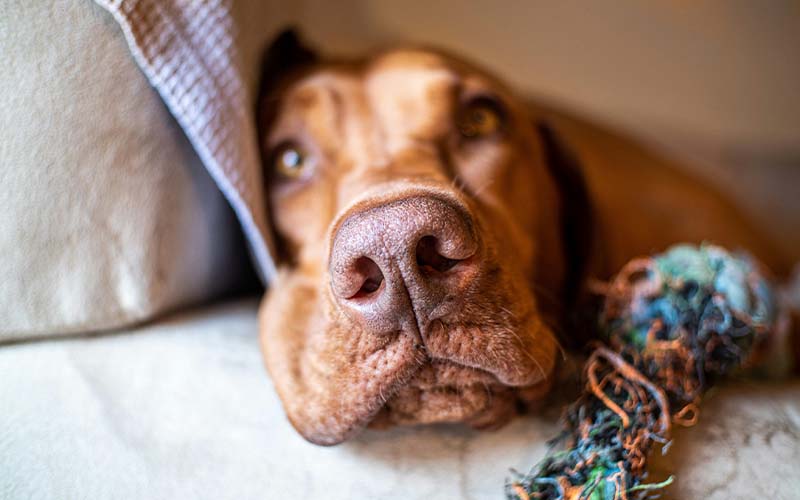
The Biology of Scent: Why Moisture Matters
The primary reason your dog’s nose remains moist is to supercharge their sense of smell. While humans have roughly 6 million olfactory receptors, dogs boast up to 300 million, depending on the breed. To utilize these receptors effectively, the nasal surface must be damp. A thin layer of mucus on the rhinarium (the hairless part of the nose) acts like a chemical adhesive, capturing scent particles from the air. When a dog sniffs, these captured particles are dissolved in the moisture and carried into the nasal cavity.
Furthermore, dogs possess a unique structure known as the vomeronasal organ, or Jacobson’s organ. Located between the roof of the mouth and the nasal cavity, this organ detects pheromones—chemical signals that communicate information about other animals’ social status, reproductive state, and emotions. The moisture on the nose helps transport these heavy chemical molecules to the organ, allowing the dog to ‘read’ the environment in ways humans cannot even imagine. Research updated in 2024 suggests that this moisture also helps dogs determine the direction of scent by detecting slight temperature differences caused by evaporation as air passes over the nose.
Thermoregulation: The Nose as a Cooling System
Unlike humans, who possess eccrine sweat glands across their entire bodies, dogs have a much more limited capacity to sweat. They primarily release heat through panting and through the sweat glands in their paw pads. However, the nose plays a critical role in thermoregulation. The nasal glands produce a clear, watery fluid that evaporates, cooling the surface of the nose and the blood vessels beneath it. This specialized dog cooling mechanism helps keep the animal from overheating during exercise or in warm weather.
In fact, a 2023 study on canine physiology highlighted that the evaporation from a dog’s nose can significantly lower the temperature of the blood flowing back to the brain, providing a localized cooling effect. This is why you might notice your dog’s nose becoming exceptionally wet during a brisk walk or after a session of play. It is a sign that their internal radiator is working exactly as it should to maintain homeostasis.
Behavioral Factors and Environmental Interaction
If you watch your dog closely, you will notice they lick their nose frequently. This isn’t just a nervous habit; it is a functional behavior. By licking their nose, dogs keep the surface clean and redistribute the mucus that captures scent particles. They also lick their nose to ‘taste’ the scents they have gathered, moving chemicals toward the Jacobson’s organ for better analysis. This behavior is so frequent that it often accounts for a large portion of the moisture you feel during a greeting.
Environment also plays a massive role. Dogs are natural explorers who stick their noses into wet grass, morning dew, and water bowls. Moisture from the external environment often clings to the nose, especially in high-humidity areas. If you are currently choosing the right breed, keep in mind that adventurous, outdoor-oriented dogs will likely have wetter noses than those who prefer indoor lounging.
Breed Differences and Nasal Structure
Not all canine noses are created equal. The physical structure of a dog’s face—specifically whether they are dolichocephalic (long-snouted) or brachycephalic (short-snouted)—affects nasal moisture. Breeds like Bloodhounds and German Shepherds have a massive surface area on their noses, allowing for significant mucus production and scent capture. Conversely, brachycephalic breeds like Pugs, French Bulldogs, and Boxers often struggle with dry noses.
Because their snouts are recessed, brachycephalic dogs may have difficulty licking their noses effectively. Additionally, their nasal passages are often narrower, which can lead to different patterns of moisture evaporation. In some cases, these breeds are prone to nasal hyperkeratosis, a condition where the skin on the nose becomes thickened, dry, and crusty. Owners of these breeds should be particularly vigilant about using nose balms or veterinary-approved moisturizers to prevent cracking and discomfort.
When a Dry Nose is a Concern
A common myth is that a dry nose always means a dog is sick. In reality, a healthy dog’s nose can be dry for many reasons, such as recently waking up from a nap (dogs don’t lick their noses while asleep) or being near a heat vent in the winter. However, persistent dryness combined with other clinical signs can be a red flag. If your dog has a dry, cracked nose along with symptoms of lethargy and behavioral changes, it may indicate dehydration or an underlying systemic issue. You can read more about identifying these shifts in our guide on how to tell is my dog depressed, as physical and mental health are often linked.
Specific symptoms that warrant a veterinary visit include:
- Thick or Colored Discharge: While clear moisture is normal, yellow, green, or cloudy discharge usually indicates a respiratory infection or foreign body.
- Cracking and Bleeding: Severe dryness that leads to open sores can be painful and lead to secondary infections.
- Persistent Heat: If the nose is consistently hot to the touch and the dog seems sluggish, they may have a fever.
- Nasal Depigmentation: If the nose is changing color from black to pink or develops flaky scales, it could be a sign of an autoimmune condition like discoid lupus erythematosus.
Expert Review: The Veterinary Perspective
Dr. Fiona Lee, a veterinary consultant, emphasizes that while a wet nose is a positive sign, it is not a standalone indicator of health. “Owners should look at the ‘big picture’,” Dr. Lee notes. “A wet nose is great, but we also look at appetite, activity levels, and the clarity of the eyes.” For those managing a dog’s health, understanding the legal responsibilities of pet owners often includes providing preventative care, which encompasses monitoring these small physical changes and seeking professional help when anomalies occur.
Frequently Asked Questions (FAQ)
Is a dry nose a sign of fever?
Not necessarily. While a fever can cause dehydration which leads to a dry nose, many healthy dogs have dry noses after sleeping or sitting in the sun. Taking a rectal temperature is the only way to accurately confirm a fever in a dog.
Why is my dog’s nose wet only on one side?
Uneven moisture or discharge from only one nostril is often a sign of a localized issue, such as a foreign object (like a grass seed) stuck in the nasal passage, a tooth root abscess, or a nasal polyp. This should be checked by a vet.
Can dogs get sunburned on their noses?
Yes, especially dogs with pink or light-colored noses. Sunburn can cause the nose to become dry, red, and eventually peel. Use pet-safe sunscreen if your dog spends a lot of time outdoors.
How can I safely moisturize my dog’s dry nose?
Use products specifically formulated for dogs, such as snout balms containing shea butter, coconut oil, or vitamin E. Avoid human lotions, which may contain scents or chemicals that are toxic if licked.
Does age affect nose moisture?
Yes, older dogs are more prone to dryness and hyperkeratosis as their skin loses elasticity and their activity levels—and subsequent nose licking—decrease.
Conclusion
The wet nose of a dog is a marvel of biological engineering, serving as a high-tech scent detector and a sophisticated cooling unit. While a damp nose is generally a hallmark of a healthy, active dog, it is important to remember that moisture levels can fluctuate throughout the day based on activity and environment. By paying attention to the color of nasal discharge and the texture of the skin, you can stay ahead of potential health issues. Keep your pup hydrated, protect them from extreme weather, and enjoy the many damp nudges that come with being a dog owner.


