With their kaleidoscopic coats, piercing eyes, and an intellect that often rivals their human companions, Australian Shepherds have solidified their status as a beloved staple in households across the United States. Ranking consistently within the Top 15 of the American Kennel Club’s most popular breeds as of 2024, these athletic marvels are far more than just a pretty face. They are the quintessential working dogs, bred for stamina and sharp-wittedness. However, owning an Aussie is a commitment that requires more than just a backyard and a bowl of kibble; it demands an active lifestyle and a willingness to engage in high-level mental stimulation. If you are looking for a dog that will challenge you, adventure with you, and remain fiercely loyal, the Australian Shepherd might just be your perfect match.
The Misleading Name: A History of the Aussie
Despite what their name suggests, the Australian Shepherd did not originate in the Land Down Under. Their lineage actually traces back to the Basque region of Spain and France. Indigenous shepherds from this area brought their herding dogs to Australia in the 1800s to work with sheep. Eventually, these shepherds migrated to the United States, specifically the American West, bringing their versatile dogs with them. American ranchers were so impressed by these tireless workers that they mistakenly associated the dogs with the shepherds’ previous residence, and the name “Australian Shepherd” stuck.
During the mid-20th century, the breed’s popularity skyrocketed through the rodeo circuit. Their incredible agility and ability to learn complex tricks made them stars of the show, helping to move the breed from the ranch to the family home. It is important to distinguish them from the Australian Cattle Dog (or Blue Heeler), as they are distinct breeds with different physical builds and temperaments. Before bringing one of these legends home, it is wise to research finding the perfect pup and whether adoption or buying is right for you, as breed-specific rescues often have many Aussies looking for active owners.
Physical Characteristics: A Kaleidoscope of Color
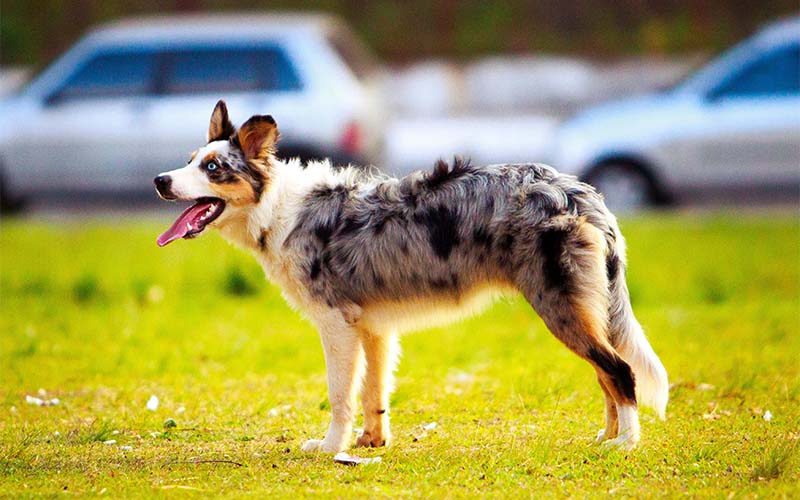
Aussies are medium-sized dogs built for agility. Males typically stand between 20 to 23 inches tall and weigh 50 to 65 pounds, while females are slightly smaller at 18 to 21 inches and 40 to 55 pounds. Their physical hallmark is their stunning double coat, which comes in four recognized colors: Black, Red, Blue Merle, and Red Merle. The merle pattern creates a marbled effect of darker splotches on a lighter background, often complemented by white markings or tan points.
Their eyes are equally captivating. It is common for Aussies to exhibit heterochromia, a condition where they have two different colored eyes, or even “split” eyes where one iris contains multiple colors like blue, brown, amber, or green. This striking appearance is paired with a muscular, slightly longer-than-tall frame that allows for the explosive speed and sharp turns required for herding livestock.
The Bobbed Tail Debate
One of the more unique physical traits of the breed is the tail. Approximately one in five Australian Shepherds is born with a naturally bobbed tail. Historically, ranchers docked the tails of those born with long tails to prevent injury while working around cattle and brush. While this practice remains a standard for showing in many American circles, it has become controversial globally, with many owners opting to keep the long, bushy tail intact.
Temperament: High Intelligence Meets High Energy
The Australian Shepherd is often described as a “Velcro dog” because of their intense desire to be near their owners. They are incredibly loyal and protective, often acting as a shadow to their favorite human. However, this loyalty comes with a high-drive temperament. Without a job to do or significant exercise, an Aussie can become bored and destructive. This isn’t a dog that will be content with a quick five-minute walk around the block.
In a recent 2024 survey of herding dog owners, over 80% reported that their dogs exhibited “herding behaviors” toward children or other pets in the home. For an Aussie, this often involves nipping at heels or circling. While this is natural, it requires consistent training to manage. If they aren’t given a physical outlet, you might find yourself wondering is my dog depressed, as inactivity can lead to lethargy and behavioral regression in this high-octane breed.
Training and Mental Stimulation
Because they are highly intelligent, Aussies learn new commands with lightning speed. They thrive on positive reinforcement training and complex tasks. Standard obedience is often not enough; many Aussie owners participate in agility trials, frisbee competitions, and scent work to keep their dogs engaged.
- Early Socialization: Vital to prevent the breed’s natural wariness of strangers from turning into aggression.
- Puzzle Toys: Use slow feeders and interactive games to make them work for their meals.
- Consistency: Aussies are smart enough to find loopholes in your rules, so firm, fair boundaries are essential.
Health and Longevity: What to Expect
The average lifespan of an Australian Shepherd is 12 to 15 years. While generally hardy, they are predisposed to certain genetic conditions. One of the most significant is the MDR1 gene mutation (Multi-Drug Resistance). Dogs with this mutation are dangerously sensitive to common veterinary drugs, including certain parasite preventatives. It is highly recommended that owners have their Aussies tested for this gene early on.
Other common health concerns include:
- Hip and Elbow Dysplasia: Joint issues that can affect mobility.
- Hereditary Cataracts: And other eye conditions like CEA (Collie Eye Anomaly).
- Epilepsy: Which can often be managed with medication if diagnosed early.
Proper rest is also crucial for recovery after a long day of play. Investing in high-quality dog beds that combine comfort and durability will ensure your active companion has a supportive place to rest their joints.
Expert Verdict: Is the Aussie Right for You?
Expert trainers and veterinarians agree: the Australian Shepherd is a top-tier companion for an active family but a potential disaster for a sedentary household. Their beauty is undeniable, but their brain is their most prominent feature. If you have the time to devote to training and the energy for daily adventures, you will never find a more devoted friend. If you live in a small apartment and work long hours away from home, the Aussie’s intensity may prove overwhelming.
Frequently Asked Questions (FAQ)
1. Do Australian Shepherds shed a lot?
Yes. They have a thick double coat and shed year-round, with heavier shedding during the spring and fall. Regular weekly brushing is necessary to manage the fur.
2. Can Aussies live in apartments?
It is possible but challenging. They require at least 60-90 minutes of vigorous exercise daily. Without a yard, you must be prepared to spend significant time at parks or on trails.
3. Are they good with children?
Generally, yes. They are very protective and affectionate with their “pack.” However, their herding instinct may lead them to nip at running children, which must be addressed through training.
4. Why does my Aussie have two different colored eyes?
This is called heterochromia and is a common genetic trait in the breed, particularly those with the merle coat pattern. It does not typically affect their vision.
5. What is the MDR1 mutation?
It is a genetic defect that makes the dog unable to pump certain drugs out of their brain, leading to toxicity. Testing is simple and vital for the breed.
Conclusion
The Australian Shepherd is a masterpiece of canine evolution, blending beauty, brawn, and brains into a medium-sized package. While they require a significant investment of time and energy, the reward is a loyal partner that will follow you to the ends of the earth. By understanding their history, respecting their heritage, and providing for their complex needs, you can ensure your Aussie lives a long, vibrant, and happy life as a cherished member of your family.


