As someone who has spent a lifetime surrounded by animals—ranging from the subtle, scaled movements of bearded dragons to the complex social hierarchies of domestic dogs—I’ve learned that the most profound conversations happen without a single word. Our dogs are constantly speaking to us; the question is, are we truly listening? We often simplify their language into a wagging tail meaning ‘happy’ and a growl meaning ‘angry,’ but canine communication is a nuanced, full-body symphony that requires a keen eye and a compassionate heart to interpret correctly. When we bridge this communication gap, we don’t just become better owners; we become true partners to our four-legged companions.
The Silent Symphony: Why Understanding Body Language Matters
Understanding canine body language isn’t just a party trick to show off at the dog park; it is a vital skill for safety, health, and emotional bonding. Harmony Diers, a seasoned veterinary technician at the Texas A&M College of Veterinary Medicine & Biomedical Sciences, emphasizes that decoding these signals allows us to peer into our dogs’ internal worlds. By recognizing the subtle flick of an ear or the tension in a shoulder, we can identify when a dog is overwhelmed before they feel the need to resort to more drastic measures like biting or bolting.
In my years of working with various species, I have found that dogs are perhaps the most expressive, yet frequently misunderstood. Unlike many exotic pets that mask their vulnerability as a survival tactic, dogs are incredibly social and evolved specifically to communicate with humans. However, we often project our own human emotions onto them—a phenomenon known as anthropomorphism—which can lead to dangerous misinterpretations. For instance, a dog “guilty” look is usually just a display of submission or fear in response to a human’s angry tone. To truly advocate for our pets, we must learn to see the world through their eyes.
Reading the Happy Dog: The Anatomy of a Joyful Canine
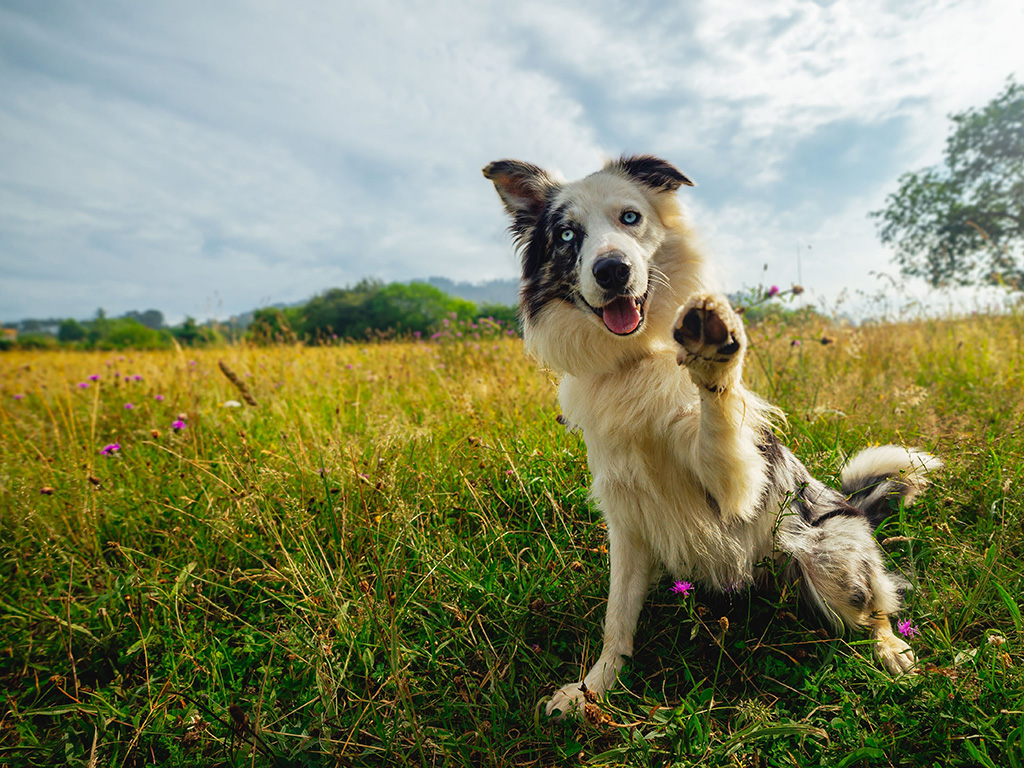
We all want our dogs to be happy, but what does “happy” actually look like in canine terms? It isn’t always a high-energy zoomie session; often, true contentment is found in relaxation. A happy dog is a loose dog. Their muscles are fluid, their mouth might be slightly open in a “smile,” and their eyes are soft and almond-shaped. When a dog is truly at ease, you will see their weight distributed evenly across all four paws, rather than leaning forward or backward.
The Eyes and the Mouth: Soft Glances and Puppy Smiles
A dog’s eyes can tell you everything. In a relaxed state, you shouldn’t see much of the whites of the eyes (the sclera). The pupils will be a normal size, and the gaze will be soft. The mouth is another great indicator. A relaxed dog often has a slightly open mouth with the tongue hanging loosely to the side. This is often accompanied by “soft” ears. Depending on the breed, these ears might be forward but not rigid, or gently folded back against the head.
The “Helicopter Tail” and Posture
The tail is perhaps the most famous part of the dog’s communicative toolkit, but it is also the most frequently misread. While many people think any wag is a good wag, the style of the wag matters immensely. Harmony Diers points out that circular wags—often called “helicopter wags”—are a hallmark of pure joy and submissive friendliness. If the tail is wagging so hard that the dog’s entire rear end wiggles with it, you are looking at a very happy pup. This kind of full-body engagement is a clear sign of social comfort, often seen during puppy socialization where young dogs learn to greet their peers with enthusiasm.
Recognizing Stress and Anxiety Before It Escalates
Life can be stressful for a dog. From loud vacuum cleaners to unfamiliar visitors, our human world is full of potential triggers. As responsible guardians, it is our job to catch the early signs of discomfort. When a dog feels threatened or nervous, their body language shifts from loose and fluid to stiff and focused. They might tuck their tail tightly between their legs or carry it very high and rigid, moving it in a fast, vibrating motion that indicates high arousal rather than happiness.
The Whale Eye and Displacement Behaviors
One of the most critical warning signs is the “whale eye.” This occurs when a dog keeps their head still but follows a perceived threat with their eyes, revealing the whites in a crescent shape. This is a clear signal that the dog is feeling defensive or anxious. You might also notice “displacement behaviors”—actions that seem out of context, like suddenly sniffing the ground, licking their lips when no food is present, or yawning when they aren’t tired. If you notice these cues, it’s a sign that your dog needs space or a change in environment. For more detailed insights, you can explore signs your dog is experiencing anxiety to better support them.
The “Shake Off”: Releasing Tension
Have you ever noticed your dog shaking their whole body as if they were wet, even though they are perfectly dry? This is often a “reset” button. Dogs do this to physically shake off the adrenaline and cortisol that build up during a stressful encounter. It’s a great sign! It means the dog is trying to move past the stress and return to a state of calm. If you see this after a tense greeting at the dog park, it’s a sign that your dog is successfully decompressing.
Breed-Specific Quirks: When Physicality Masks Intention
It is important to remember that not all dogs are built the same, and physical traits can sometimes mask communicative signals. A German Shepherd’s ears are naturally upright and alert, which can make them look “on guard” even when they are relaxed. Similarly, breeds like Pugs or Bulldogs have naturally wide, bulging eyes, making it harder to detect a “whale eye” at first glance. Northern breeds like Huskies and Malamutes often carry their tails curled tightly over their backs, which in other breeds might signify high arousal or dominance.
When working with different breeds, you must look at the cluster of signals rather than just one body part. If a Pug has wide eyes but a wiggly body and a soft mouth, he’s likely fine. If a Husky has a high tail but is also showing his teeth and standing stiffly, that is a clear warning. Recognizing these triggers and prevention for dog aggression is essential for anyone living in a multi-pet household or frequenting public spaces.
Body Language as a Diagnostic Tool for Health
Dogs are masters at hiding physical pain, an evolutionary carryover from their wild ancestors. However, their body language often betrays them. A dog in pain may become suddenly irritable, isolating themselves from the family or snapping when touched in a certain area. You might notice a “tucked” abdomen, a roached (curled) back, or a stiff, stilted gait. Diers notes that even subtle lip-smacking or excessive panting when it isn’t hot can be a sign of nausea or internal distress. If your normally social dog starts “hiding” in closets or under beds, it’s time for a veterinary check-up to ensure there isn’t an underlying medical issue.
People Also Ask: Common Canine Communication Questions
Why does my dog wag its tail to the left?
Fascinatingly, research suggests that the direction of a tail wag can indicate emotion. A wag biased toward the right side of the body typically indicates positive feelings (like seeing their owner), while a wag biased toward the left can indicate negative or anxious feelings (like seeing an unfamiliar, dominant dog).
What does it mean when a dog yawns?
While dogs do yawn when they are tired, they frequently yawn to self-soothe. If your dog yawns while you are hugging them or while a child is nearby, it is likely a sign that they are feeling pressured and are trying to calm themselves down.
Can a dog wag its tail and still bite?
Absolutely. A wagging tail simply signifies emotional arousal. A dog who is highly agitated, aggressive, or about to hunt might wag their tail in a stiff, rapid, or “flagging” motion. Always look at the rest of the body—stiff legs, hard eyes, and a closed mouth—before assuming a wag means the dog is friendly.
Expert Verdict: The Language of Connection
The beauty of the human-canine bond lies in our ability to adapt to one another. Your dog spends every waking hour studying your movements, your tone of voice, and even your scent to understand your moods. The least we can do is return the favor. By learning the subtle dialect of tail wags, ear positions, and eye contact, we move from being mere “owners” to becoming true advocates for our pets’ well-being.
Actionable Conclusion for Pet Owners
To start “decoding” your dog today, follow these three steps:
- Observation Sessions: Spend 5 minutes a day just watching your dog interact with their environment without interfering. Note the position of their ears and tail.
- Context is King: Always interpret body language within the context of the situation. A lick on the face can be an affectionate kiss, or it can be a submissive “appeasement” gesture if the dog is feeling pressured.
- Respect the “No”: If your dog shows signs of stress (yawning, whale eye, turning away), give them space immediately. This builds immense trust and prevents behavioral escalations.
By staying curious and attentive, you ensure a safer, happier life for your furry friend and a deeper, more rewarding relationship for yourself.


