With their agile grace and insatiable curiosity, cats often find themselves captivated by the most intriguing of household spectacles: the fish tank. This shimmering, watery world, alive with movement and color, presents an irresistible allure to our feline friends. It’s a meeting of two different realms, each with its own set of rules and inhabitants, yet existing side by side in our living spaces. For a cat, an aquarium isn’t just a piece of decor; it is a high-definition, 4D interactive theater that stimulates every predatory fiber of their being. However, this fascination is not without its challenges. Balancing a cat’s natural instincts with the safety and well-being of both pets requires understanding, patience, and strategic planning. As we move into 2024, the trend of ‘multi-species enrichment’ has taken center stage, focusing on creating environments where predators and prey-type animals can coexist without chronic stress. Achieving this harmony is about understanding the ‘why’ behind the behavior to implement solutions that work for the long term.
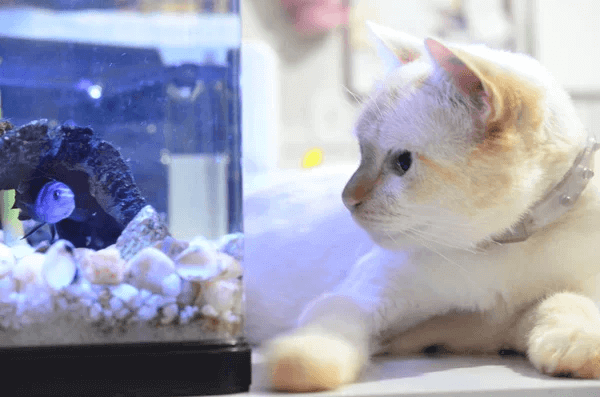
The Biology of Interest: Why Cats are Obsessed with Aquariums
To effectively manage the interaction between your cat and your fish, you must first understand the predatory drive. Cats are hardwired hunters. In the wild, movement triggers a neurological response that prepares the cat for a stalk, pounce, and capture. The lateral, flickering movement of fish mimics the exact patterns of small birds or rodents. According to recent feline behavioral studies in 2023, cats spend up to 40% of their waking hours in some form of ‘environmental scanning.’ An aquarium provides a concentrated source of high-contrast movement that acts as ‘Cat TV,’ offering mental stimulation that is hard to find elsewhere in a static home environment.
It is important to realize that this doesn’t mean your cat is constantly in ‘attack mode.’ For many felines, the tank serves as a source of visual enrichment. However, the line between watching and interacting is thin. When a cat begins to paw at the glass or attempt to climb the stand, the interaction shifts from passive observation to active hunting, which is where the risks to both the fish and the cat begin to escalate.
The Hidden Risks: Stress, Chemicals, and Physical Danger
When feline fascination turns into obsession, the consequences can be dire. From a physical standpoint, the most obvious risk is the structural integrity of the tank. A standard 20-gallon aquarium weighs approximately 225 pounds when full. If a 10-pound cat leaps onto a poorly supported tank or leans heavily against the glass, the risk of a catastrophic tip-over is real. In 2024, pet insurance data suggested a rise in ‘household environmental accidents,’ with aquarium-related incidents figuring prominently in multi-pet homes.
Beyond the physical crash, there are biological risks:
- Fish Stress: Fish are highly sensitive to vibrations and shadows. A looming cat creates a ‘predator shadow’ that triggers a cortisol spike in fish, weakening their immune systems and making them susceptible to diseases like Ich or fin rot.
- Water Chemistry: Cats often try to drink from the tank. Many aquariums use water conditioners, fertilizers for live plants, or medications (like copper-based treatments) that can be toxic to felines.
- Bacterial Transfer: A cat’s paw carries various bacteria and litter particles. If they successfully ‘dip’ into the water, they can introduce harmful pathogens into the delicate aquatic ecosystem.
Strategic Prevention: Securing the Aquatic Environment
The first line of defense is the physical setup of the aquarium. High-end aquarists now recommend integrated aquarium cabinets rather than open stands. These cabinets enclose the filtration systems and wires, which are secondary attractions for curious cats who love to chew on dangling cords.
Invest in a Heavy-Duty Lid
Forget the flimsy plastic hoods that come with starter kits. To cat-proof a tank, you need a weighted or locking canopy. Modern glass tops with sliding locks are the gold standard. They prevent the cat from gaining paw access while maintaining the aesthetic of the tank. For larger setups, custom-built wooden canopies provide a sturdy surface that can actually support the cat’s weight if they do manage to jump up, preventing a fall into the water.
Strategic Placement and ‘Aversion’ Zones
Location is everything. Placing a tank in a ‘low-traffic’ zone reduces the cat’s constant exposure to it. Furthermore, you can use tactile deterrents around the base of the tank. Many behaviorists suggest using double-sided ‘sticky’ tape or aluminum foil on the surface where the cat usually lands to reach the tank. Cats despise these textures and will quickly learn that the area around the aquarium is unpleasant to navigate.
Case Study: The ‘Siamese and the Sump’
In a 2023 case study from a prominent feline behavior consultancy, a homeowner struggled with a Siamese cat that had learned to open the lid of a 55-gallon reef tank. The cat wasn’t interested in eating the fish but was fascinated by the moving bubbles of the protein skimmer. The solution was two-fold: the owner installed child-proof magnetic locks on the tank lid and provided the cat with an automated water fountain in a different room. By giving the cat its own source of ‘moving water,’ the obsessive behavior toward the fish tank dropped by 85% within three weeks. This highlights the importance of redirection over simple punishment.
Environmental Enrichment: Giving the Cat a Better Option
If you want your cat to leave the fish alone, you must provide a more compelling alternative. Positive reinforcement and environmental enrichment are your best tools. Consider the following:
- Window Perches: A ‘Bird TV’ setup—a bird feeder placed outside a window with a comfortable cat perch—provides the same visual stimulation as a fish tank but in a safer way.
- Interactive Tech: Use AI-driven toys that mimic prey movement. These devices can be programmed to activate at times when you aren’t home, keeping the cat occupied.
- Vertical Space: Cats feel most secure when they are high up. By installing sustainable cat shelves on the opposite side of the room from the tank, you give the cat a vantage point to watch the room without needing to climb the aquarium stand.
Expert Review: The Integrated Approach
According to veterinary behaviorists, the most successful households use the ‘Three-P Pillars’: Physical Barriers, Passive Deterrents, and Proactive Enrichment. Simply scolding a cat for its natural curiosity is rarely effective and can damage the human-animal bond. Instead, focus on making the fish tank ‘boring’ and the cat’s own toys ‘exciting.’ Experts also suggest using synthetic feline pheromone diffusers near the aquarium to help the cat remain in a calm, non-aroused state when in the same room.
Frequently Asked Questions (FAQ)
Can my cat get sick from eating fish flakes?
While a single flake likely won’t cause harm, fish food is highly concentrated and not formulated for feline digestion. It can cause upset stomachs or, in rare cases, allergic reactions. Keep all fish food in airtight, cat-proof containers.
Do fish actually feel ‘scared’ of the cat?
Yes. Fish have a developed ‘flight’ response. Constant stalking by a cat leads to chronic stress, which suppresses the fish’s immune system. If your fish are constantly hiding, it’s a sign they feel threatened by the cat’s presence.
Is it safe to let my cat drink aquarium water?
No. Aquarium water contains nitrates, phosphates, and potentially harmful bacteria like Salmonella or Mycobacterium. Always provide your cat with fresh, filtered water in their own bowl.
Will a motion-activated sprayer work?
Motion-activated air canisters (like Ssscat) can be effective at keeping cats away from specific zones. However, they should be used cautiously as they can also startle the fish due to the sudden noise and vibration.
Conclusion
In our homes, where the silent world of the aquarium meets the inquisitive eyes of a feline, we have the opportunity to create a unique and harmonious environment. This journey isn’t just about setting boundaries or installing locks; it’s about weaving a tapestry of life enriched by our diverse companions. By fostering an environment of understanding and respect, we celebrate the vibrant, peaceful coexistence within our walls. Through strategic placement, physical security, and high-quality enrichment, you can ensure that your ‘finned and furred’ friends thrive together in a space that is safe for everyone. The key is to remain proactive, staying one step ahead of that feline curiosity to ensure your living room remains a place of serenity rather than a battleground.


