Do you share your home with a so-called “Velcro dog”? You know the type: a loyal companion who shadows your every move, from the kitchen to the bathroom, often standing so close that you find yourself stumbling over them. While this level of devotion is heartwarming, it can sometimes be hazardous to your balance. However, this natural desire to be near you can be channeled into an impressive, confidence-building skill. Teaching your dog to weave between your legs is not just a crowd-pleasing trick; it is a fundamental exercise in canine focus, spatial awareness, and mutual trust. By turning a potential tripping hazard into a structured activity, you provide your pet with the mental and physical outlet they crave while strengthening the unique bond you share.
The Science and Benefits of Leg Weaving
In the world of modern canine behavioral science, trick training is recognized as a vital pillar of pet wellness. Beyond the sheer novelty of the performance, leg weaving taps into a dog’s proprioception—their awareness of their own body in space. For many dogs, navigating the tight spaces between a human’s legs requires a significant amount of coordination and core strength. This is one of the many reasons why dog training is so important; it challenges the brain and the body simultaneously. A 2023 study by the Association of Professional Dog Trainers (APDT) highlighted that structured trick training can reduce stress levels in high-energy breeds by up to 25%, as it satisfies their cognitive drive to work.
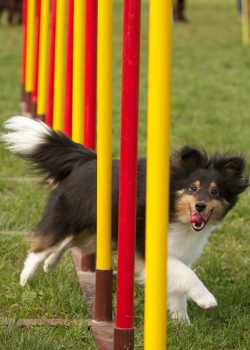
Furthermore, leg weaving is a gateway to more advanced disciplines. This movement is a core component of canine agility, specifically the weave pole obstacle. By teaching your dog to navigate your legs, you are laying the foundational muscle memory and focus required for competitive dog sports. For older dogs, this gentle movement helps maintain joint flexibility and cognitive sharpness, proving that you can indeed teach an old dog new tricks.
Preparing Your Environment and Mindset
Before you begin the physical steps, it is crucial to establish the right atmosphere. Success in trick training is 80% preparation and 20% execution. You need a space with non-slip flooring to prevent your dog from sliding, which can cause injury or a loss of confidence. Additionally, your dog should already be familiar with the “watch me” cue and basic hand-target signals. If your dog is overly energetic, a quick five-minute walk before training can help them settle into a focused mindset. Remember, the goal is to find a balance where your dog is attentive but not frantic. Identifying effective ways to provide your dog with mental stimulation ensures they are receptive to new patterns without becoming frustrated.
Phase 1: The “Peek-a-Boo” Foundation
The first phase is about removing any fear your dog might have of being directly under you. Many dogs are naturally hesitant to stand beneath a human, so we start with the “Peek.”
- Step 1: Stand with your legs wide apart in a comfortable stance.
- Step 2: Lure your dog to a sitting position directly behind you.
- Step 3: Using a high-value treat in your hand, reach through your legs from the front and call your dog’s name.
- Step 4: When your dog pokes their head through your legs to investigate the treat, say “Good peek!” and reward them immediately.
- Step 5: Spend several days practicing this “peek” motion. Make it a game. The goal is to have your dog happily waiting to stick their head through your legs the moment you take the stance.
Phase 2: Introducing the Step and Lure
Once your dog is comfortable being partially under you, it is time to introduce forward motion. This requires coordination from both the dog and the handler. This is also where essential tools for training your dog, such as clickers or specific high-value treat pouches, become incredibly useful.
- Step 6: Position your dog in a standing stance on your right side, facing the same direction as you.
- Step 7: Take a large, deliberate step forward with your left leg, creating a “triangular” opening.
- Step 8: Hold a treat in your left hand and lower it under your left leg, luring your dog’s head through the opening.
- Step 9: Gradually move your hand forward and away from your leg, drawing the dog’s entire body through the gap.
- Step 10: As the dog completes the pass, mark the behavior with the word “Weave” and deliver the treat.
- Step 11: Repeat this on the opposite side, stepping forward with your right leg and luring with your right hand.
Advanced Maneuvers: The Figure-8 Flow
As your dog gains confidence, you can begin to chain these individual steps together to create a fluid, walking weave. This is often referred to as the “Figure-8” or “Leg Slalom.” To achieve this, you must learn to time your steps with your dog’s natural gait. Use an open palm signal under your outstretched thigh to guide them. Timing is everything; if you step too late, the dog will hit your leg; if you step too early, the dog may lose focus and wander off. Expert handlers suggest moving in a slow-motion rhythm until the dog learns to anticipate the next leg opening. In 2024, many trainers are using “proprioceptive platforms” to help dogs understand where their hind legs are, which significantly speeds up the learning curve for this specific trick.
Troubleshooting Common Challenges
Not every dog will master the weave on the first try. Here are common hurdles and how to overcome them:
- The Dog Stalls Underneath: If your dog stops halfway, you might be moving the treat too fast. Slow down your lure and keep the treat closer to their nose.
- The Dog Jumps Up: This usually indicates over-excitement. Lower the value of the treat or practice when the dog is slightly more tired.
- The Dog is Too Large: If you have a Great Dane or a large Mastiff, the traditional weave may not be physically possible for you. Instead, teach a “side-weave” where the dog circles around each of your legs in a figure-8 pattern while you remain stationary.
- Loss of Interest: Keep sessions short—no more than 3 to 5 minutes at a time. The “three-rep rule” is a great guideline: if they do it well three times, end the session on a high note.
Expert Review and Final Verdict
Teaching the leg weave is a masterclass in positive reinforcement training. It requires the owner to be mindful of their own body language while simultaneously rewarding the dog’s effort. Our expert verdict is that this trick is one of the top five most beneficial behaviors for “Velcro” breeds like Australian Shepherds, Border Collies, and Vizslas. It transforms their desire to cling into a productive skill that improves their athletic ability and mental health. From a journalistic perspective, the trend toward “home-agility” in 2024 shows that owners are increasingly seeking ways to engage their pets beyond simple walks. The leg weave is the perfect entry point into this world.
Frequently Asked Questions (FAQ)
How long does it take to teach a dog to weave?
For most dogs, the initial “peek” can be learned in one day, but achieving a fluid, walking weave usually takes 2 to 4 weeks of consistent, daily practice. Patience is key!
Can small breeds like Chihuahuas learn this?
Absolutely! Small breeds are often more agile and find the space between legs less intimidating. However, you will need to bend down further to lure them, so mind your back posture during training.
What are the best treats to use?
Use “high-value” treats that are small, soft, and easy to swallow quickly. Tiny pieces of boiled chicken, freeze-dried liver, or small bits of cheese are ideal. You want a treat the dog can eat in less than a second so training doesn’t lose momentum.
My dog is afraid of my legs, what should I do?
This is common with rescue dogs or timid personalities. Start very slowly by simply rewarding them for standing near your legs while you are stationary. Never force a dog through your legs; let them choose to come through for the reward.
Do I always need to use treats?
Initially, yes. Once the behavior is “on cue” (meaning the dog does it when you say “weave” without seeing a treat), you can begin to use intermittent reinforcement, rewarding every second or third successful weave with a treat or high-praise.
Conclusion
Training your dog to weave between your legs is a journey that rewards both the handler and the hound. It turns a mundane walk across the living room into a playful dance of cooperation. By following this 11-step guide and focusing on positive reinforcement, you will not only impress your friends and family but also provide your dog with a profound sense of accomplishment. Remember, every dog learns at their own pace. Keep the sessions fun, keep the treats flowing, and soon your Velcro dog will be an agility star in the making.


