The dawn of the twenty-first century has brought about a silent revolution within our homes. We have moved from simple manual locks to biometric entry, and from basic thermostat dials to artificial intelligence that predicts our comfort levels before we even walk through the door. This wave of innovation has naturally extended its reach to our most loyal companions: our pets. The smart pet feeder, once a niche gadget for tech enthusiasts, has morphed into a multi-billion dollar industry as of 2024. These devices promise a world where no cat goes hungry during a late-night shift and no dog feels neglected while their owner is stuck in traffic. With features ranging from high-definition video streaming to two-way audio and precision portion control, the convenience factor is undeniable. However, as we integrate these sophisticated pieces of hardware into our private lives, we must ask ourselves a critical question: what is the true cost of this convenience? Beyond the sleek plastic and intuitive apps lie complex layers of data, network vulnerabilities, and physical risks that every responsible pet owner needs to understand.
The Invisible Harvest: Privacy and Your Pet’s Data
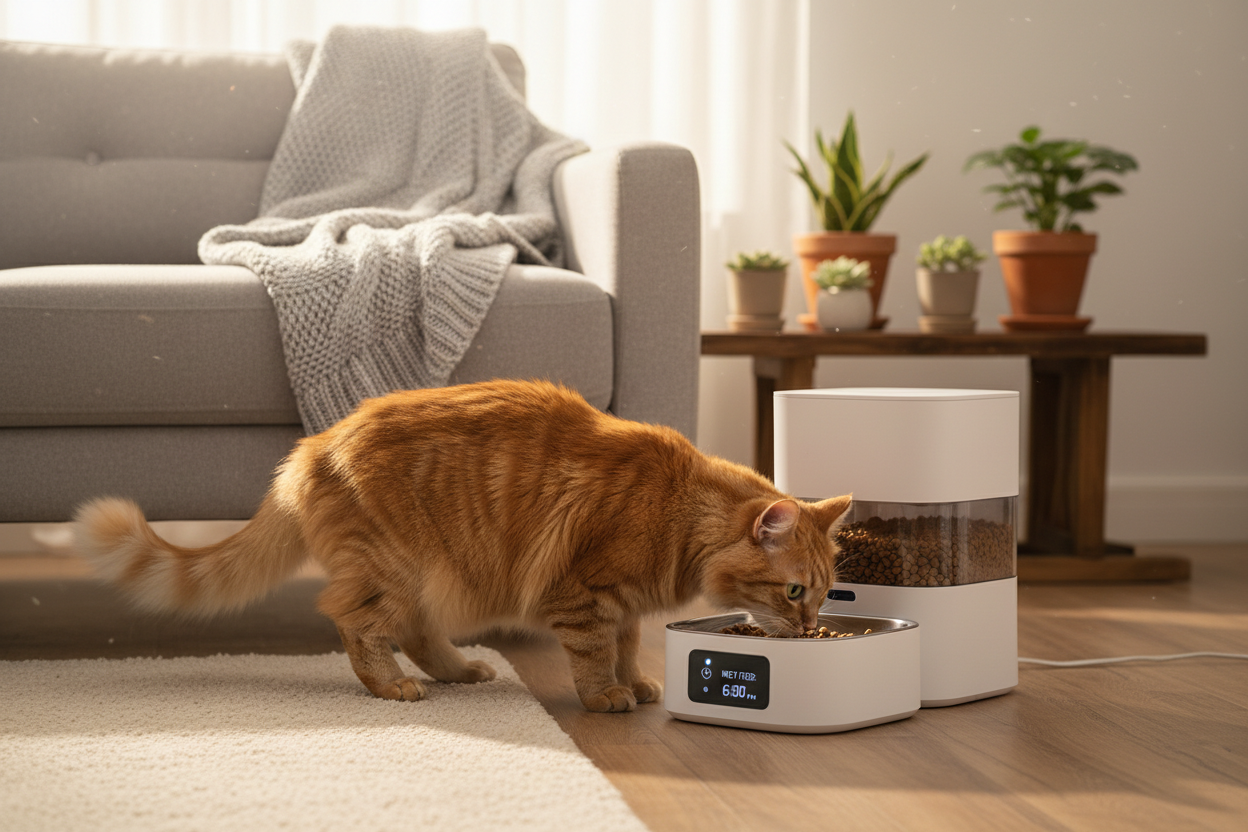
When you set up a smart pet feeder, you aren’t just buying a bowl and a motor; you are inviting a data-collecting hub into your home. These devices often require the creation of an account, which immediately links your name, email address, and physical location to the device. Throughout 2023 and 2024, privacy advocates have raised concerns about the “invisible harvest” of metadata generated by these gadgets. Every time your pet is fed, a data point is created. Over weeks and months, this data builds a detailed profile of your household’s daily routine. If the feeder logs that your pet eats at 7:00 AM and 6:00 PM, a malicious actor or an overreaching data broker can infer when you are likely at home and when you are away. The reality is that your pet’s feeding schedule is a window into your own life. Many manufacturers remain vague about how this data is stored and whether it is shared with third-party marketers. Without robust end-to-end encryption for stored data, your daily habits remain an open book for anyone with access to the manufacturer’s backend servers. Furthermore, as artificial intelligence becomes more integrated into these systems, the ability to predict human behavior based on pet care patterns only becomes more accurate and, potentially, more invasive.
The Digital Trojan Horse: Cybersecurity Vulnerabilities
Perhaps the most significant risk associated with smart pet feeders is their role as a potential “Trojan Horse” for your home network. Unlike laptops and smartphones, which receive frequent security patches and run sophisticated antivirus software, Internet of Things (IoT) devices like feeders are notoriously under-secured. In many cases, these devices are built using “off-the-shelf” firmware that may not have been updated in years. Security researchers have frequently discovered hard-coded passwords and open ports that allow hackers to bypass standard security measures entirely. If a hacker gains access to your smart feeder, they aren’t just interested in overfeeding your cat; they are interested in moving laterally through your network. Once inside, the feeder can be used as a staging ground to attack more sensitive devices, such as your personal computer or a home office NAS where financial documents are kept. Real-world cases in recent years have shown that unsecured IoT devices are often drafted into “botnets”—massive networks of compromised gadgets used to launch Distributed Denial of Service (DDoS) attacks. Your pet’s feeder could, without your knowledge, be participating in a global cyberattack simply because the manufacturer prioritized low cost over security protocols.
Eyes and Ears in the Kitchen: Surveillance Concerns
Many high-end smart feeders now come equipped with HD cameras and sensitive microphones designed to let you check in on your furry friends. While this is a heartwarming feature, it introduces a significant surveillance risk. If the device’s software is compromised, these cameras and microphones can be turned against you. There have been documented instances where hackers have hijacked the video feeds of household IoT devices to peek into private lives or even speak through the built-in speakers to startle residents. A device meant for pet care can quickly transform into a tool for domestic espionage. Even if a hacker isn’t involved, the security of the cloud storage where these videos are kept is often a concern. If the manufacturer’s servers are breached, hours of footage from inside your home could be leaked. Owners should always check if their feeder uses encrypted streaming (like TLS/SSL) and whether they have the option to physically shutter the camera lens when it is not in use.
Physical and Technical Reliability: The Hunger Gap
We often place blind trust in technology, but smart pet feeders are susceptible to the same technical glitches as any other computer. A simple firmware update gone wrong, a server outage at the manufacturer’s headquarters, or a flicker in your home Wi-Fi can lead to a skipped meal. For pets with medical conditions like diabetes, where precise feeding times are critical, a technical failure can be life-threatening. Reliability is the most overlooked risk factor in the smart feeder market. Many cheaper models do not have internal memory to store schedules locally; they rely entirely on a constant internet connection. If the cloud goes down, the bowl stays empty. Furthermore, mechanical jams—often caused by larger kibble sizes or oily pet food—can render the device useless while the app falsely reports a successful feeding. This “false positive” feedback loop is dangerous because it gives the owner a sense of security while the pet is actually going hungry.
Expert Review: The Verdict on Smart Feeding
From an expert perspective, the smart pet feeder market is a classic example of “buyer beware.” While brands like Petlibro, Furbo, and WOPET have made strides in improving their security postures and adding mechanical redundancies, the market is also flooded with generic, white-label products that offer zero security transparency. The expert verdict is clear: convenience should never come at the cost of your home’s digital integrity. The best smart feeders are those that offer local storage for schedules, battery backups, and robust two-factor authentication (2FA). If a device requires you to keep a default password or asks for unnecessary permissions on your phone (like access to your entire contact list), it should be avoided. For high-stakes pet care, these devices should be used as an aid, not a total replacement for human supervision.
Frequently Asked Questions
- Can my smart pet feeder be used to hack my bank account? While a feeder won’t directly access your bank, it can serve as an entry point into your home network. From there, a sophisticated hacker could monitor your internet traffic or access other devices where financial information is stored.
- How can I make my smart feeder more secure? Always change the default password immediately. Set up the device on a “Guest” Wi-Fi network to isolate it from your main computers. Ensure you enable Two-Factor Authentication (2FA) if the app supports it.
- What happens if the power goes out? Most high-quality feeders have a battery backup system (usually D-cell batteries) that allows the device to continue feeding on a basic schedule even if the power and Wi-Fi fail. Always ensure fresh batteries are installed.
- Are pet cameras always recording? This depends on the brand. Some only stream when you open the app, while others record motion-triggered clips to the cloud. Review the privacy policy to see how long these clips are stored and who has access to them.
- Should I buy a feeder with a built-in microphone? Only if you intend to use it. If you are concerned about privacy, look for models that do not include audio features or those that allow you to disable the microphone in the settings.
- Is a VPN necessary for a smart feeder? While not strictly necessary for the device itself, running your home router through a VPN can encrypt all outgoing data, providing an extra layer of protection against data harvesting.
Conclusion
Smart pet feeders represent a significant leap forward in the way we care for our animals, providing peace of mind for the busy modern owner. However, as we have explored, this technology is not without its pitfalls. From the threat of lateral network attacks and privacy breaches to the mechanical failure of the feeding arm itself, the risks are real and multifaceted. By approaching these gadgets with a critical eye, choosing reputable brands, and implementing basic cybersecurity hygiene—such as using guest networks and complex passwords—you can enjoy the benefits of automation without compromising your family’s safety. Ultimately, the smartest way to feed your pet is to stay informed and stay involved, ensuring that technology serves as a bridge, rather than a barrier, to your pet’s well-being.


