Known affectionately as the “low-rider” of the feline world, the Munchkin cat is perhaps one of the most distinctive and controversial breeds in existence today. With their short legs and boundless energy, these cats have captured the hearts of pet owners globally, despite being at the center of heated debates regarding ethical breeding. In 2024, the popularity of the Munchkin continues to soar, fueled by viral social media content that showcases their unique rabbit-like stance and playful “magpie” tendencies. However, owning a Munchkin requires more than just an appreciation for their cute appearance; it demands a deep understanding of their unique genetic makeup, potential health challenges, and specialized care needs. This guide delves into everything you need to know about the Munchkin breed, from its accidental origins to the modern-day expert consensus on their health.
The History and Controversy of the Munchkin Breed
The Munchkin’s history is not one of ancient lineage but of a spontaneous genetic mutation. While short-legged cats were documented as far back as the 1940s, the modern breed can be traced to a pregnant stray named Blackberry, found in Louisiana in 1983. Half of Blackberry’s litter was born with short legs, and these kittens became the foundation of the breed we recognize today. By 1994, the International Cat Association (TICA) accepted the Munchkin into its New Breed development program, eventually granting it full championship status in 2003.
Despite their official recognition by TICA, the breed remains controversial. Major organizations like the Cat Fanciers’ Association (CFA) and the Governing Council of the Cat Fancy (GCCF) refuse to recognize the Munchkin, citing concerns that breeding for a physical deformity—specifically achondroplasia or hypochondroplasia—is inherently unethical. However, proponents of the breed argue that Munchkins do not suffer from the same spinal issues seen in short-legged dog breeds like Dachshunds, as the feline spine is naturally more flexible. Understanding how these cats move and interact with their environment is key to providing them a high quality of life, which often begins with the art of cat communication to ensure you are meeting their specific physical needs.
Physical Characteristics and the “Napoleon” Complex
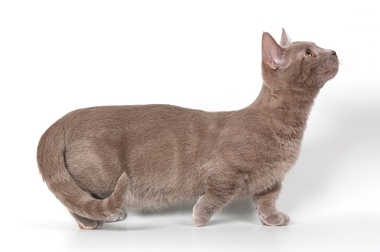
The defining feature of the Munchkin is, of course, its legs. These are categorized into three lengths: “standard,” “super-short,” and “rug-hugger.” Despite their short stature, Munchkins are medium-sized cats with a muscular build. They come in both long-haired and short-haired varieties, with coats that can feature any color or pattern imaginable. Their hind legs are slightly longer than their front legs, which gives them a unique silhouette and allows them to sit up on their haunches—often called the “meerkating” position—to get a better view of their surroundings.
Because they cannot jump as high as a typical feline, owners must adapt their homes to accommodate these little explorers. This might involve providing steps or ramps to help them reach their favorite sunny spots. If you are looking to create a comfortable environment, setting up a cat-friendly living space is essential for ensuring they can navigate their world safely without straining their joints.
Temperament: A Big Personality in a Small Package
Don’t let the short legs fool you; Munchkins are incredibly fast and agile. They are often described as having a “kitten-like” personality that lasts well into their senior years. They are famously social, curious, and intelligent. Many owners report that their Munchkins are “magpies,” frequently stealing shiny objects like jewelry or bottle caps and hiding them away in secret stashes. They thrive on interaction and do remarkably well in households with children and other pets.
In 2024, behavioral studies have highlighted that social breeds like the Munchkin benefit significantly from mental stimulation. They are not solitary creatures and can develop separation anxiety if left alone for extended periods. For those living in busy environments, maintaining harmony is vital, especially when introducing a Munchkin to a home with existing pets. Utilizing the ultimate multi-cat survival guide can help ensure that your short-legged friend integrates seamlessly into the household hierarchy.
Health and Longevity: What New Owners Must Know
While many Munchkins live long, healthy lives of 12 to 15 years, the breed is predisposed to certain skeletal conditions due to the mutation that causes their short legs. Two primary concerns are lordosis (an excessive inward curvature of the spine) and pectus excavatum (a hollowed chest). These conditions are typically identified in kittenhood. Additionally, as they age, Munchkins may be more susceptible to osteoarthritis, as their joints work harder to compensate for their limb structure.
Recent data from 2023 veterinary surveys suggests that maintaining an ideal weight is the most critical factor in a Munchkin’s health. Even a small amount of excess weight can put significant pressure on their short limbs and spine. Regular veterinary check-ups and a high-quality diet are non-negotiable. Pet insurance is highly recommended for this breed to cover potential diagnostic imaging and long-term joint care management.
Expert Review: Living with a Munchkin
Expert Verdict by Dr. Fiona Lee, DVM: “The Munchkin is a resilient and joyful breed, but they are not ‘low-maintenance’ in terms of health awareness. From a clinical perspective, we monitor these cats closely for mobility issues. However, when bred responsibly, they show a remarkable zest for life. A case study involving a 5-year-old Munchkin named ‘Oliver’ showed that with a combination of low-impact play and a diet rich in Omega-3 fatty acids, he maintained the mobility scores of a standard-legged cat. My advice to prospective owners is to always ask breeders for genetic health screenings and to be prepared for the unique structural needs of these felines.”
Frequently Asked Questions (FAQ)
Can Munchkin cats jump?
Yes, Munchkins can jump, but not as high as a typical cat. They are excellent climbers and can often be found on furniture, though they might take a more circuitous route (jumping from a chair to a table rather than directly to the floor) to reach their destination.
Are Munchkin cats in pain?
There is no evidence that the Munchkin gene itself causes pain. However, like any breed with a structural mutation, they can be more prone to joint issues like arthritis as they age, which can cause discomfort if not managed by a veterinarian.
How much does a Munchkin cat cost in 2024?
Due to their popularity and the complexity of breeding (the Munchkin gene is lethal if a kitten inherits it from both parents), prices are high. Expect to pay anywhere from $1,000 to $3,500 depending on the lineage, coat, and leg length.
Do they require special grooming?
Short-haired Munchkins require weekly brushing, while long-haired varieties need brushing 2-3 times a week. Because of their shorter legs, some Munchkins may have difficulty reaching certain spots during self-grooming, so owners should keep an eye on their hygiene.
Conclusion
The Munchkin cat is a testament to the diversity of the feline world. While their appearance may be their most famous trait, it is their affectionate and playful spirit that truly defines them. For the right owner—one who is willing to provide a supportive environment and stay vigilant about joint health—the Munchkin offers a unique and rewarding companionship. As we move through 2024, the focus remains on ethical breeding and proactive veterinary care to ensure these “low-riders” continue to live happy, active lives.


