In the world of feline companionship, few breeds capture the heart as instantly as the Ragdoll. Known globally for their striking blue eyes, luxurious semi-long coats, and a temperament that more closely resembles a loyal lapdog than a typical aloof cat, the Ragdoll has consistently ranked as one of the most popular cat breeds in the world. As we move through 2024, the popularity of these “gentle giants” continues to surge, driven by their adaptability to modern living and their uncanny ability to melt into the arms of anyone who holds them. Whether you are a first-time pet owner or a seasoned cat enthusiast, understanding the nuances of this breed—from their specific grooming needs to their unique behavioral quirks—is essential for a harmonious household. In this comprehensive guide, we delve deep into the history, physical traits, and care requirements that make the Ragdoll a standout choice for families everywhere.
The Origin and History of the Ragdoll
The Ragdoll is a relatively modern breed, tracing its roots back to Riverside, California, in the early 1960s. The breed’s founder, Ann Baker, developed the line using a white domestic longhaired cat named Josephine. Josephine was known for her placid nature, a trait that she passed on to her offspring. Baker focused on selecting for large size, striking color points, and, most importantly, the characteristic “floppy” disposition that gave the breed its name. When picked up, a purebred Ragdoll will often go completely limp, much like a child’s ragdoll toy.
While the breed’s origins were once shrouded in colorful myths, the reality is a story of careful selective breeding. By the 1990s, major feline associations like the Cat Fanciers’ Association (CFA) and The International Cat Association (TICA) officially recognized the breed. Today, they are celebrated for being one of the largest domesticated cat breeds, often outsized only by the Maine Coon. Understanding their background helps owners appreciate the art of cat communication, as Ragdolls often have subtle ways of expressing their deep devotion to their humans. For more on this, you can explore how cats tell you what they want through their unique body language.
Physical Characteristics: A Study in Elegance
The Ragdoll is a study in substantial beauty. They are slow-maturing cats, often taking up to four years to reach their full size and coat color. A healthy adult male can weigh between 12 and 20 pounds, while females typically range from 10 to 14 pounds. Despite their size, they are not “fat” cats; rather, they possess a heavy-set, muscular build with a broad chest and sturdy bones.
The Ragdoll Coat and Color Palette
The coat is one of the Ragdoll’s most famous features. It is semi-long, silky, and remarkably fine. Unlike many longhaired breeds, the Ragdoll has a minimal undercoat, which means they are less prone to heavy matting—though they still require regular attention. The coat is generally shorter around the face and forelimbs, flowing into a magnificent ruff around the neck and a bushy, plume-like tail.
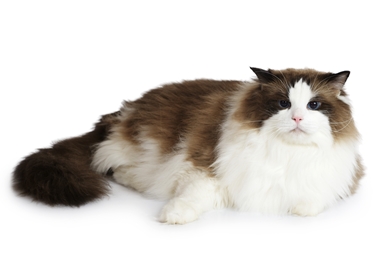
Ragdolls are strictly “pointed” cats, meaning their body is lighter than their extremities (face, ears, tail, and legs). They come in four main patterns:
- Pointed: Darker points with no white markings.
- Mitted: Similar to pointed but with white “mittens” on the front paws and white “boots” on the back legs, plus a white chin and belly stripe.
- Bi-color: An inverted white “V” on the face, with white legs and belly.
- Van: Color restricted to the ears, top of the head, and the tail.
Common colors include seal (dark brown), chocolate, blue (grey), and lilac (pale pinkish-grey). Regardless of the color or pattern, all pedigree Ragdolls possess large, oval, vivid blue eyes that are a hallmark of the breed.
Temperament: The “Puppy-Cat” Personality
If you are looking for a cat that will greet you at the door and follow you from room to room, the Ragdoll is for you. They have earned the nickname “puppy-cats” because of their social and docile nature. Unlike some breeds that prefer high perches, Ragdolls are often “floor cats” or “lap cats,” preferring to stay at the same level as their human companions.
Their reduced hunting and fighting instincts make them incredibly safe for families with children. They are highly adaptable and thrive in various environments, provided they receive enough affection. Because of their calm demeanor, they are particularly well-suited for high-density living. If you are bringing a Ragdoll into an urban environment, setting up a cat-friendly living space is a great way to ensure they have the mental stimulation they need without requiring a massive backyard.
Health and Wellness: Protecting Your Gentle Giant
While Ragdolls are generally robust, like all purebred animals, they are predisposed to certain genetic conditions. According to veterinary data and insurance claim trends from 2023-2024, the most significant health concern for the breed is Hypertrophic Cardiomyopathy (HCM). This is a condition where the heart muscle thickens, making it harder for the heart to pump blood. Responsible breeders now use DNA testing to screen for the gene mutation responsible for HCM.
Other health considerations include:
- Polycystic Kidney Disease (PKD): A condition where cysts form on the kidneys.
- Bladder Stones: Ragdolls can be prone to urinary tract issues; staying hydrated is key.
- Obesity: Because of their sedentary nature, Ragdolls can easily pack on extra pounds, which puts strain on their joints.
To keep your Ragdoll healthy, routine veterinary check-ups are non-negotiable. Many owners find the experience of going to the clinic stressful for their pets, but modern techniques can help. Learning about reducing vet visit trauma can make a significant difference in your cat’s long-term health management.
Expert Review: Is the Ragdoll Right for You?
Our expert verdict is that the Ragdoll is an ideal companion for individuals or families who want an interactive, low-energy pet. They are not suited for owners who are away from home for long periods, as they can suffer from loneliness and separation anxiety. Their “soft” nature means they do not handle aggressive or loud environments well. However, in a loving, peaceful home, they are arguably the most rewarding feline companions available today.
Frequently Asked Questions
Do Ragdoll cats shed a lot?
While they have long hair, Ragdolls lack a thick undercoat, which significantly reduces the amount of shedding and matting compared to a Persian. However, they do shed seasonally and require brushing at least twice a week to keep their coat glossy and healthy.
Are Ragdolls strictly indoor cats?
Most breeders and veterinarians strongly recommend keeping Ragdolls indoors. Their docile nature and lack of aggressive instincts mean they are not well-equipped to defend themselves against predators or navigate the dangers of traffic.
How big do Ragdoll cats actually get?
They are among the largest domestic cats. A male can reach 20 pounds and be quite long from nose to tail. They don’t reach their full skeletal size until age 3 or 4.
Are Ragdolls hypoallergenic?
No cat is truly hypoallergenic. Ragdolls still produce the Fel d 1 protein in their saliva and skin. However, because they lack an undercoat, some people with mild allergies find them easier to live with than other longhaired breeds.
Conclusion
The Ragdoll is a masterpiece of feline breeding—a perfect blend of stunning physical beauty and a heart of gold. By providing them with a high-quality diet, regular grooming, and plenty of lap time, you will be rewarded with a companion that offers unconditional love and a calming presence. As we have seen through 2024 trends, the human-animal bond is more important than ever, and the Ragdoll stands as a testament to the peace and joy that a feline friend can bring into our lives.


